How to Choose a Luxury Handbag: Complete 2026 Guide
Choosing the right luxury handbag is one of the most personal fashion decisions you will make. This guide walks you through every factor that matters — from material quality and construction to brand value and occasion matching — so you spend confidently and carry something you genuinely love.
Why Choosing the Right Handbag Matters
A luxury handbag is not just an accessory — it is the most-used item in most women's wardrobes. You touch it dozens of times a day, carry it to every meeting, dinner, and errand, and it communicates your personal style to every room you enter. Getting this decision right means years of daily satisfaction. Getting it wrong means an expensive item gathering dust in your closet.
The luxury handbag market spans from under $300 entry-level pieces to $2,500+ ultra-premium investments. Within that range, quality, craftsmanship, and brand prestige vary enormously. A bag in the $300-$500 range is not automatically half as good as a $1,000-$1,500 bag — some under-$300 bags outperform $1,500+ bags in materials and construction. Understanding what separates genuine quality from brand markup is the single most valuable skill in handbag shopping.
We have reviewed 19 designer handbags across 5 categories, handled every one of them, and studied their construction, materials, and hardware in detail. This guide distills those findings into a decision framework you can apply to any luxury handbag purchase — whether it is from our catalog or not.
The 7 Factors That Define a Great Luxury Handbag
1. Material Quality
Material is the single biggest differentiator between a bag that lasts two years and one that lasts twenty. The leather or fabric determines how the bag feels in your hand, how it ages over time, and how much maintenance it requires.
Top-tier leathers: Saffiano (Prada's signature cross-hatch, virtually scratch-proof), Vitello Phenix (Prada's most durable pebbled hide), full-grain Italian pull-up leather (Frye — develops a beautiful patina). These leathers improve with age.
Mid-tier leathers: Pebbled calfskin (Coach, Michael Kors — soft and scratch-resistant), Melbourne croc-embossed (Brahmin — looks expensive, holds up well). Good daily-use leathers that require moderate care.
Alternative materials: Tessuto nylon (Prada — lightweight and water-resistant), coated canvas (Louis Vuitton, Dooney & Bourke — durable and weather-proof), cashmere wool (FENDI — luxurious but delicate). Each has trade-offs between durability, weight, and prestige.
Genuine high-quality leather has a rich, natural scent that synthetic materials cannot replicate. If a bag claims to be leather but smells like chemicals or plastic, it is likely bonded leather or synthetic. This simple test catches most quality issues before you even inspect the stitching.
2. Construction and Craftsmanship
Even the finest leather cannot save a poorly constructed bag. The stitching, edge finishing, and internal reinforcement determine whether a bag holds its shape and survives daily use or falls apart within a year.
Stitching: Look for straight, even stitches with consistent spacing. Every stitch should be tight with no loose threads. On premium bags like the Prada Esplanade, stitching is so precise it appears machine-made — but it is actually hand-guided by skilled artisans.
Edge finishing: Run your finger along any raw leather edges. High-quality bags have edges that are painted, burnished, or folded under. Unfinished edges signal corners cut during production.
Structural integrity: Set the bag on a table. A well-constructed bag sits upright without slumping (for structured styles) or drapes gracefully (for hobo and slouchy styles). The Ferragamo Studio Box is a masterclass in structural integrity — its box shape is rigid and precise.
3. Hardware Quality
Hardware is the jewelry of a handbag. Zippers, clasps, buckles, chain straps, and logo plates should feel substantial, operate smoothly, and resist tarnishing. Cheap hardware reveals itself within months — clasps that stick, zippers that catch, and plating that flakes.
Gold-tone hardware is the standard for luxury bags. It should feel heavy and cold to the touch, with a deep warm color rather than a brassy, yellowish tint. The gold curb chain on the Gucci Soho Flap is a perfect example — it feels like actual jewelry.
Signature hardware adds brand identity. Ferragamo's Gancini lock, Prada's triangular logo plate, Coach's sculpted C closure, and Gucci's interlocking GG are functional closures that double as brand signatures. These details should feel precise, not wobbly or loose.
Red flag: If hardware has visible seams, lightweight feel, or a plasticky sheen, the bag is cutting costs where it should not. Quality hardware is die-cast metal with smooth, seamless surfaces.
4. Size and Proportion
The right bag size depends entirely on what you carry daily and where you carry it. A bag that is too small frustrates you; one that is too large overwhelms your frame and becomes a bottomless pit of lost items.
Compact bags (under 9 inches): Phone, cards, keys, lipstick. Best for evening events and minimal-carry days. The LV Pochette Accessoires at 8.5 inches is the quintessential compact bag.
Medium bags (9-13 inches): The everyday sweet spot. Fits a wallet, phone, sunglasses, keys, a small cosmetics pouch, and a charger. Most shoulder bags and crossbodies fall here. The Coach Tabby 26 at 10 inches is perfectly sized for daily essentials.
Large bags (13+ inches): Laptop, tablet, documents, water bottle, plus all the above. Totes and large satchels serve this role. The Frye Melissa Shopper at 17 inches fits a full work setup.
5. Versatility and Carrying Options
A bag that can only be carried one way limits its usefulness. The most versatile bags offer multiple carrying configurations — shoulder, crossbody, hand-carry, and even clutch mode.
The Prada Tessuto Nylon leads our catalog in versatility with five carrying modes: top handle, shoulder, tote, crossbody, and document bag. The Coach Tabby 26 offers three: top handle, shoulder, and crossbody via its detachable strap. More carrying options mean more outfits and occasions where the bag works.
Before buying any luxury bag, mentally pair it with three outfits you wear often: one casual, one professional, and one dressy. If the bag works with all three, it is versatile enough to justify the investment. If it only works with one, it is a special-occasion piece — budget accordingly.
6. Brand Value and Resale Potential
Brand prestige affects both how you feel carrying the bag and how much you can recover if you sell it later. Not all luxury brands hold value equally on the resale market.
Highest resale value: Louis Vuitton monogram pieces retain 80-100% of retail. Gucci bags hold 50-70%. Prada saffiano holds 60-70%. These brands have global name recognition that sustains demand on the secondary market.
Strong quality, lower resale: Coach, Kate Spade, Michael Kors, Brahmin, and Frye deliver excellent quality-to-price ratios but retain only 30-50% of retail on resale. If resale value matters to you, invest in Gucci, LV, or Prada. If you buy bags to keep, these brands offer better value.
We cover this topic in depth in our Luxury Handbag Investment Guide.
7. Occasion Matching
Different occasions demand different bags. A structured satchel that commands respect in a boardroom feels stiff and formal at a beach barbecue. A slouchy hobo that looks effortlessly chic at brunch reads as too casual for a client dinner.
Work and business: Structured satchels and totes in neutral colors. See our work handbags guide.
Evening and formal: Compact clutches and chain-strap bags. The Versace Medusa Clutch is purpose-built for this. See our evening handbags guide.
Everyday casual: Shoulder bags, hobos, and crossbodies in versatile colors. See our everyday handbags guide.
Travel: Lightweight, secure, hands-free bags. The Prada Tessuto Nylon excels here. See our travel handbags guide.
The Decision Framework: Finding Your Perfect Bag
Step 1: Define Your Primary Use Case
Be honest about how you will use this bag 80% of the time. If it is for work commutes, size, durability, and closure security are your top priorities. If it is for weekend outings, weight, aesthetics, and comfort matter most. If it is for evening events, compactness, elegance, and chain strap quality come first.
Most women use their primary bag for daily errands and casual outings. If that describes you, a medium-sized shoulder bag or crossbody in a neutral color is the statistically best starting point. You can always add a specialized work or evening bag later.
Step 2: Set Your Budget Honestly
Luxury handbags span a massive price range. Here is what each tier delivers:
- Under $300: Genuine leather quality with less brand prestige. The Frye Melissa Shopper and Dooney & Bourke Gretta live here. Excellent value.
- $300–$500: The accessible luxury sweet spot. Coach Tabby, Brahmin Duxbury, Kate Spade Knott, and Michael Kors Kensington. Brand recognition improves significantly at this tier.
- $500–$1,500: Premium brands and better materials. Gucci Soho, Louis Vuitton Pochette, Prada Tessuto, Versace Medusa, and Gucci Interlocking GG all fall in this range.
- $1,500+: Investment-grade luxury. Prada Esplanade, Prada Vitello Phenix, Ferragamo Studio Box, FENDI Fendigraphy, and FENDI Cashmere Shopper.
For a deeper breakdown with specific recommendations at each tier, see our Luxury Handbags by Budget guide.
Step 3: Choose Your Style
Each bag style serves different needs. Understanding the trade-offs helps you choose the right silhouette for your lifestyle.
Shoulder bags are the most versatile — they hang naturally at the hip, keep your hands free, and work across casual to semi-formal settings. Browse our best shoulder bags.
Totes carry the most — they are the workhorses for commuters, travelers, and anyone who carries a laptop. Browse our best totes.
Satchels and top-handles are the most polished — structured shapes that sit upright and command respect. Browse our best satchels.
Crossbodies and compact bags are the most practical — hands-free security for active lifestyles. Browse our best crossbodies.
Hobo bags are the most relaxed — slouchy silhouettes that drape naturally for casual elegance. Browse our best hobos.
The color rule of three: Build your handbag collection with three colors: one neutral (black or cognac), one accent (red, pink, or navy), and one statement (white, bold print, or metallic). This three-color strategy pairs with virtually any wardrobe.
Step 4: Verify Quality Before Buying
Before committing to any luxury handbag — especially online — verify these quality markers:
- Stitching: Even, tight, consistent color. No loose threads or uneven spacing.
- Hardware: Heavy, smooth, cold to the touch. No visible seams or lightweight feel.
- Leather: Natural scent, even color, consistent texture. No chemical smell or plasticky sheen.
- Logo and branding: Perfectly centered, crisp lettering, clean engraving. Crooked logos are the easiest fake tell.
- Interior: Branded lining, clean stitching, functional pockets. The inside should match the outside quality.
- Authenticity materials: Dust bag, authenticity card or serial number, branded packaging.
For a complete authentication walkthrough when buying on Amazon, see our authentication guide.
5 Common Mistakes When Buying a Luxury Handbag
Mistake 1: Buying for the Logo, Not the Quality
A bag covered in monograms from a fast-fashion brand is not a luxury handbag — it is a billboard. Real luxury is in the materials, construction, and design. The Frye Melissa Shopper has zero visible branding but uses Italian full-grain leather that rivals bags three times its price. Focus on what the bag is made of, not what is printed on it.
Mistake 2: Ignoring Size and Practicality
Buying a beautiful micro bag when your daily life requires a laptop carrier leads to an expensive shelf ornament. Be realistic about what you carry every day and choose accordingly. If you carry a lot, you need a bag that is at least 13 inches wide. Do not let aesthetics override function.
Mistake 3: Skipping the Maintenance Investment
A premium Prada bag without a leather conditioner will look worse in two years than an under-$300 Frye bag that is regularly maintained. Budget for care products when you buy: leather conditioner, rain spray, a storage dust bag, and a purse hook. Total cost: about $40-60 for everything you need.
Mistake 4: Following Trends Over Classics
Trendy colors and novelty shapes are exciting, but they date quickly. Your first luxury handbag should be a classic silhouette in a neutral color — something you will still love carrying in five years. Once you own a timeless staple, you can add trendy pieces without regret.
Mistake 5: Not Researching the Seller
Amazon sells authentic luxury handbags through both its Luxury Stores program and authorized third-party sellers. But not every listing is equally trustworthy. Check seller ratings, verify "Fulfilled by Amazon" status, and look for authenticity guarantees. Our Amazon authentication guide covers this process step by step.
Our Recommendations by Use Case
Best First Luxury Handbag: Coach Tabby 26
$300–$500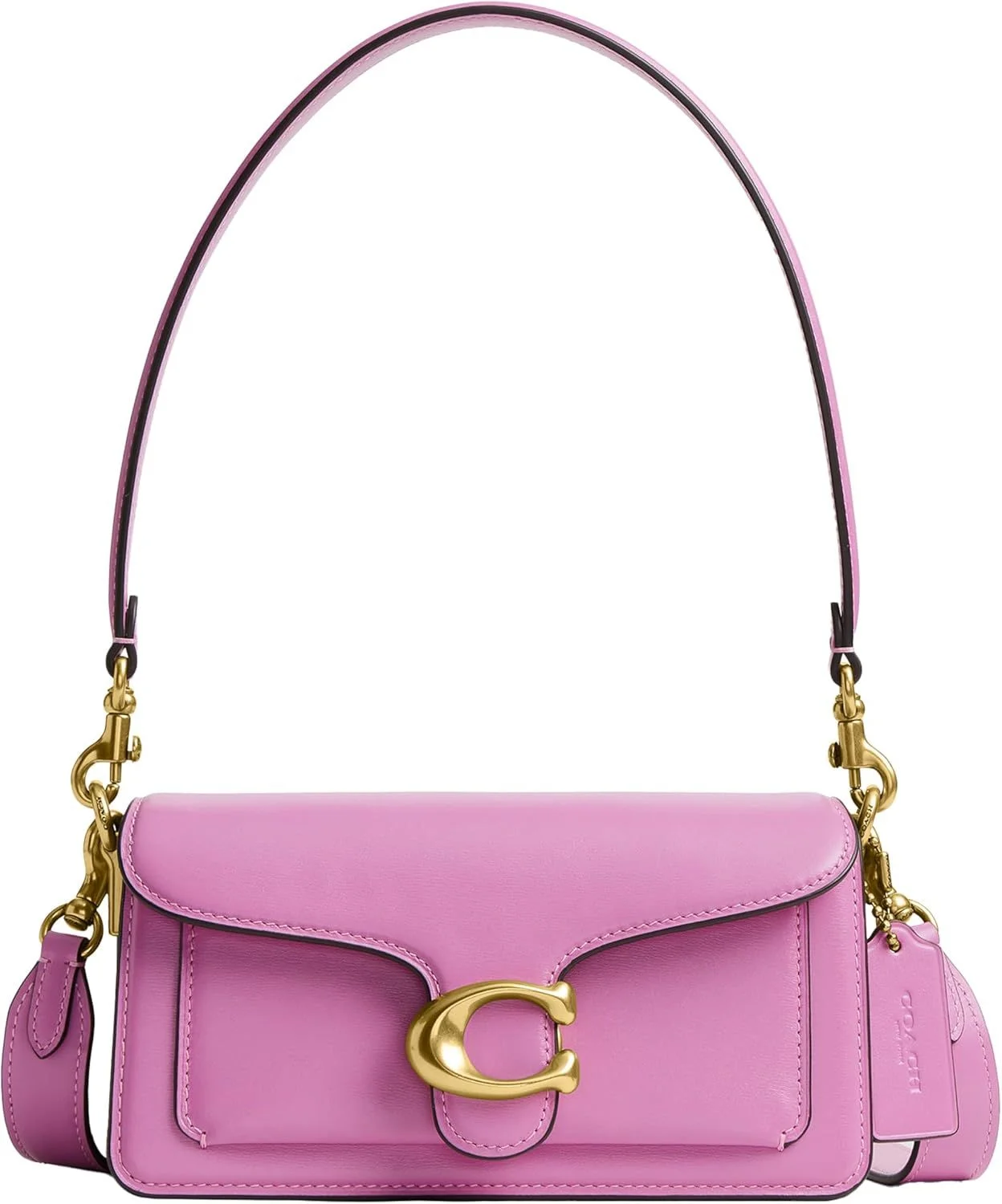
The Coach Tabby Shoulder Bag 26 delivers premium calf leather, an iconic brass closure, and shoulder-to-crossbody versatility — all under $500. It is the bag that proves you can get genuine luxury quality without a four-figure investment.
Best Investment Bag: Prada Esplanade
$1,500–$2,500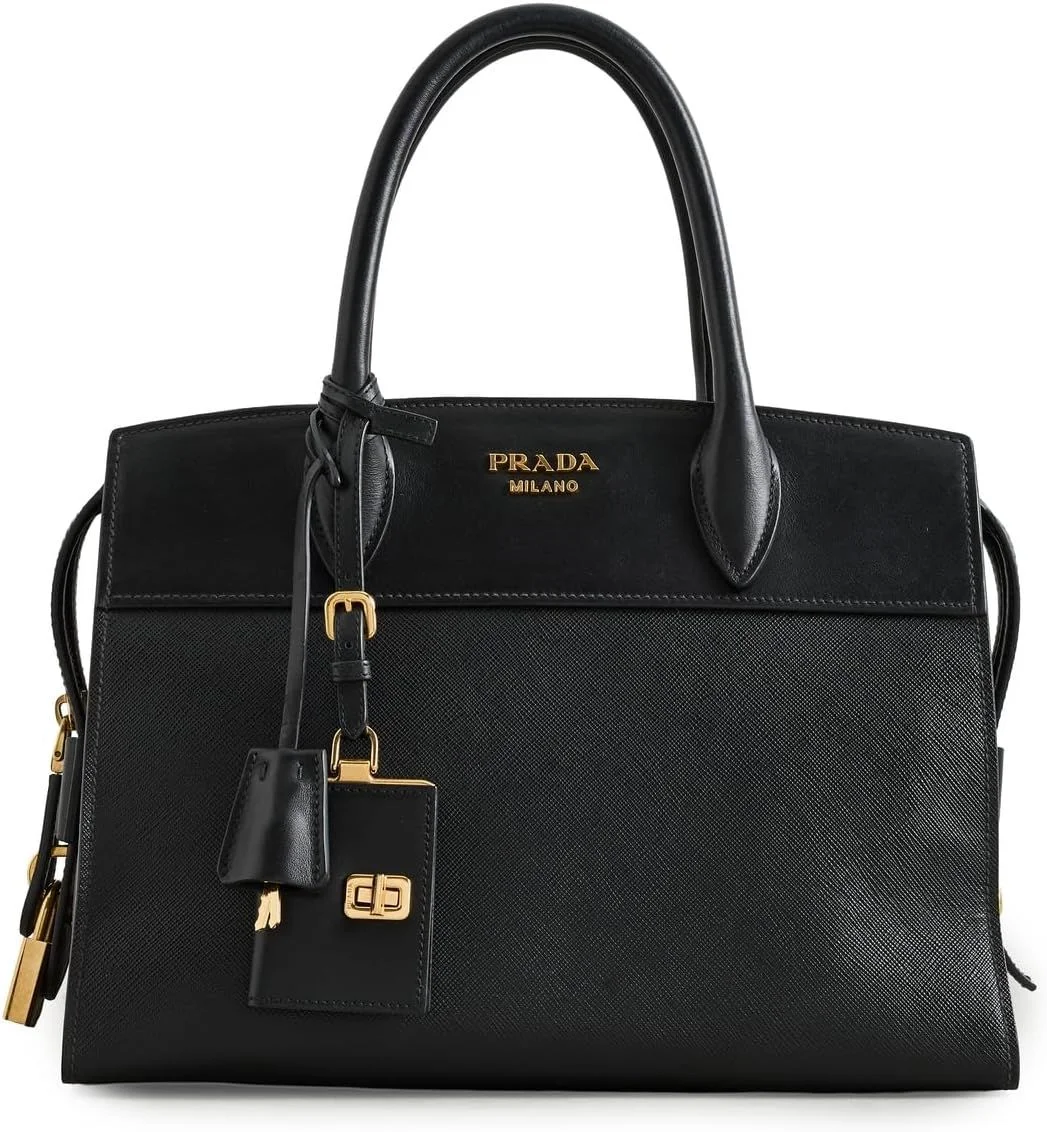
The Prada Esplanade Saffiano Leather Top-Handle Bag is built to last a decade. Prada's saffiano leather is virtually indestructible, and the dual-texture design never dates. If you are buying one bag to carry for years, this is the one.
Best Value Bag: Frye Melissa Shopper
Under $300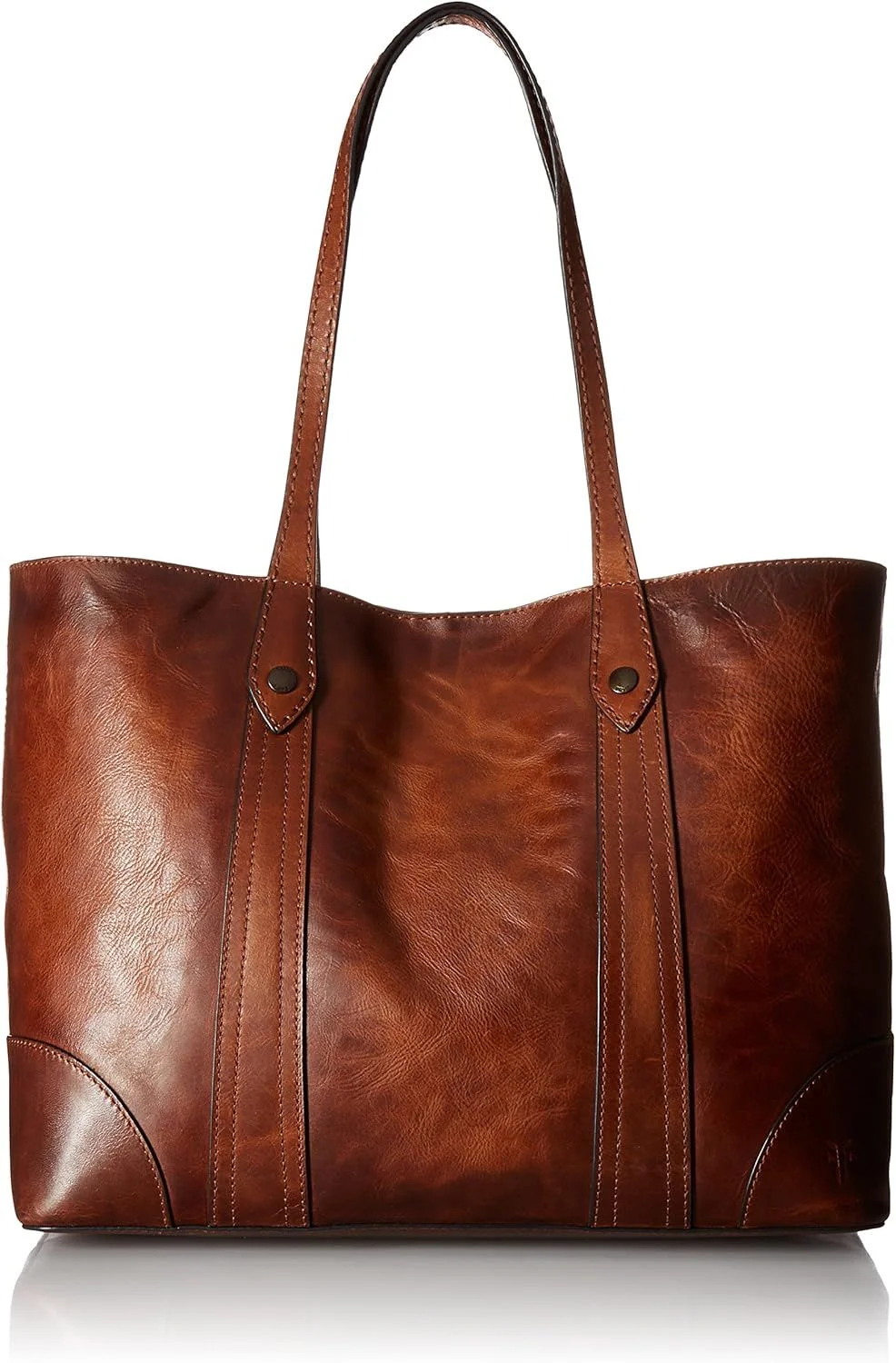
The Frye Melissa Shopper Leather Tote delivers Italian full-grain leather that develops a stunning patina over time. It is the best leather quality per dollar in our entire catalog.
Best Everyday Bag: Gucci Soho Flap
$1,000–$1,500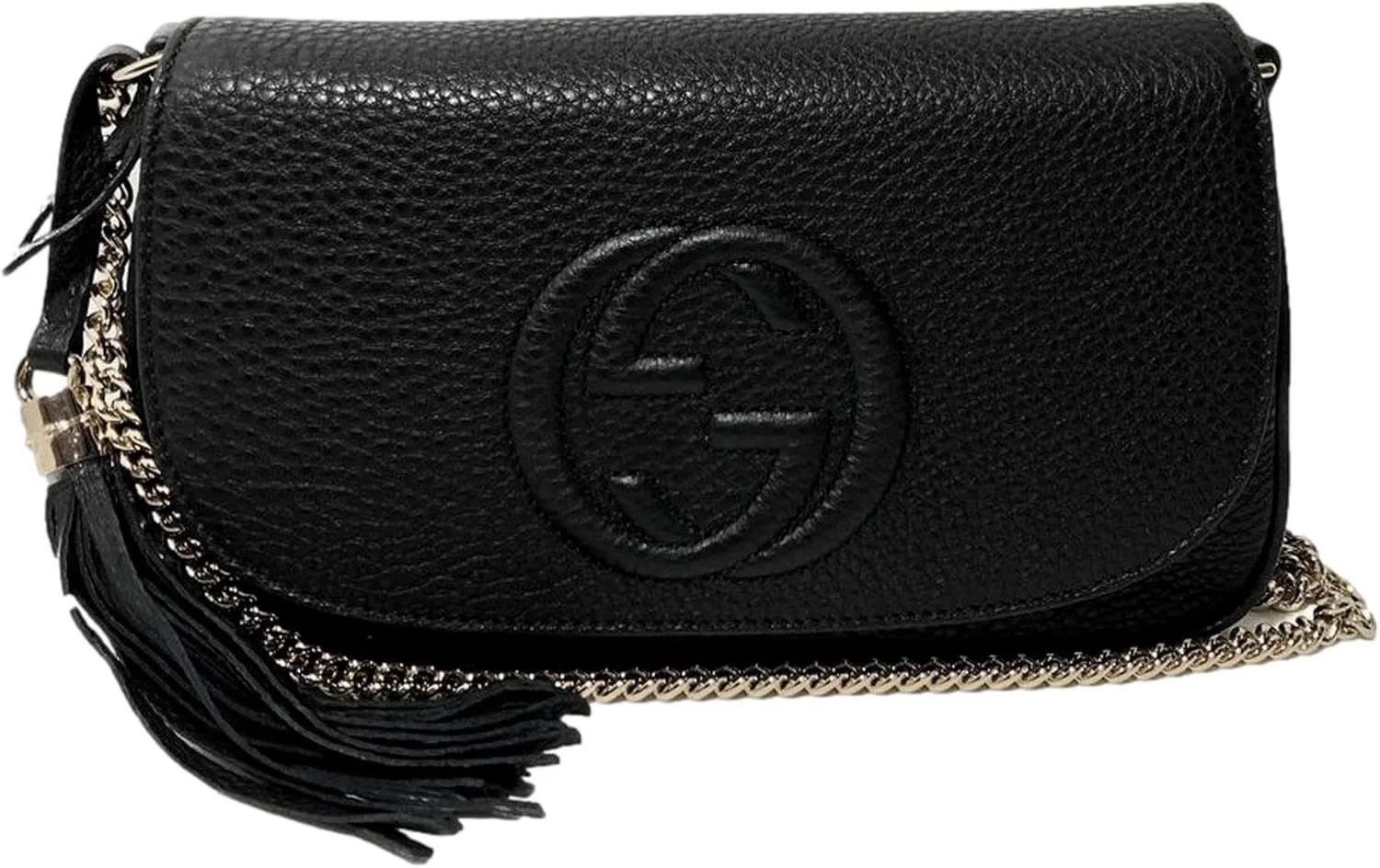
The Gucci Soho Leather Flap Shoulder Bag balances brand prestige with everyday practicality. The embossed GG logo is iconic without being loud, and the versatile chain strap works as shoulder, crossbody, or clutch.
Frequently Asked Questions
How much should I spend on my first luxury handbag?
For a first luxury handbag, we recommend spending in the $300-$500 range. This tier gets you genuine leather quality from brands like Coach, Brahmin, and Kate Spade without the risk of overspending before you know what styles you prefer. The Coach Tabby 26 and the Brahmin Duxbury are excellent starting points that deliver real craftsmanship.
What is the most versatile luxury handbag style?
A medium-sized shoulder bag in black or cognac leather is the most versatile luxury handbag. It transitions from work to dinner, pairs with jeans and dresses alike, and fits daily essentials without bulk. The Gucci Soho Flap and Coach Tabby 26 both exemplify this versatility with convertible straps that allow shoulder and crossbody wear.
Is it better to buy one expensive bag or several affordable ones?
Buy one quality bag first. A single well-made leather bag at $300-500 will outlast three cheap bags and look better every day. Once you understand your lifestyle needs and style preferences, you can strategically add a second bag in a different style or color. Quality always beats quantity in designer handbags.
How can I tell if a luxury handbag is well-made?
Check five things: straight and even stitching with no loose threads, solid hardware that feels heavy and operates smoothly, high-quality leather or fabric that smells and feels premium, properly aligned patterns at seams, and a clean interior with branded lining. Cheap imitations fail on at least two of these criteria.
What luxury handbag brands hold their value best?
Louis Vuitton, Gucci, and Prada consistently hold the strongest resale values among accessible luxury brands. The Louis Vuitton Pochette Accessoires retains 80-100% of its retail value on the secondary market. Prada saffiano leather bags retain roughly 60-70% after years of use. Coach has improved dramatically, with the Tabby line holding 50-60% of retail.
Should I choose a logo bag or a minimal design?
Choose based on your wardrobe and lifestyle. Logo bags (Gucci GG, Louis Vuitton monogram) make strong fashion statements and signal brand affinity. Minimal designs (Ferragamo Studio Box, Prada Esplanade) are more versatile across settings and age more gracefully. For a first bag, minimal designs offer more outfit pairings and longer style relevance.
What is the difference between genuine leather and bonded leather?
Genuine leather is made from real animal hide and improves with age — developing a patina and becoming softer. Bonded leather is a composite of shredded leather scraps mixed with polyurethane, which peels and cracks within 1-2 years. Every bag in our catalog uses genuine leather or premium nylon, never bonded leather. Always check the materials label before purchasing.
Start Your Search
The best luxury handbag is the one that fits your life, your style, and your budget. Start by browsing our category roundups to find the right silhouette, then read individual reviews for the bags that catch your eye. Every review includes honest pros, cons, and real-world performance insights.
If you are buying your first designer bag, our first designer handbag guide walks through the process step by step. If budget is your primary concern, our handbags by budget guide organizes every bag in our catalog by price tier.