Choosing Your First Designer Handbag
Your first designer handbag should be exciting, not overwhelming. This guide cuts through the noise and gives you a practical, step-by-step path to buying your first luxury bag — the right brand, the right style, and the right price for your lifestyle. No hype, no pressure, just honest advice from experts who have reviewed 19 designer bags across every price tier.
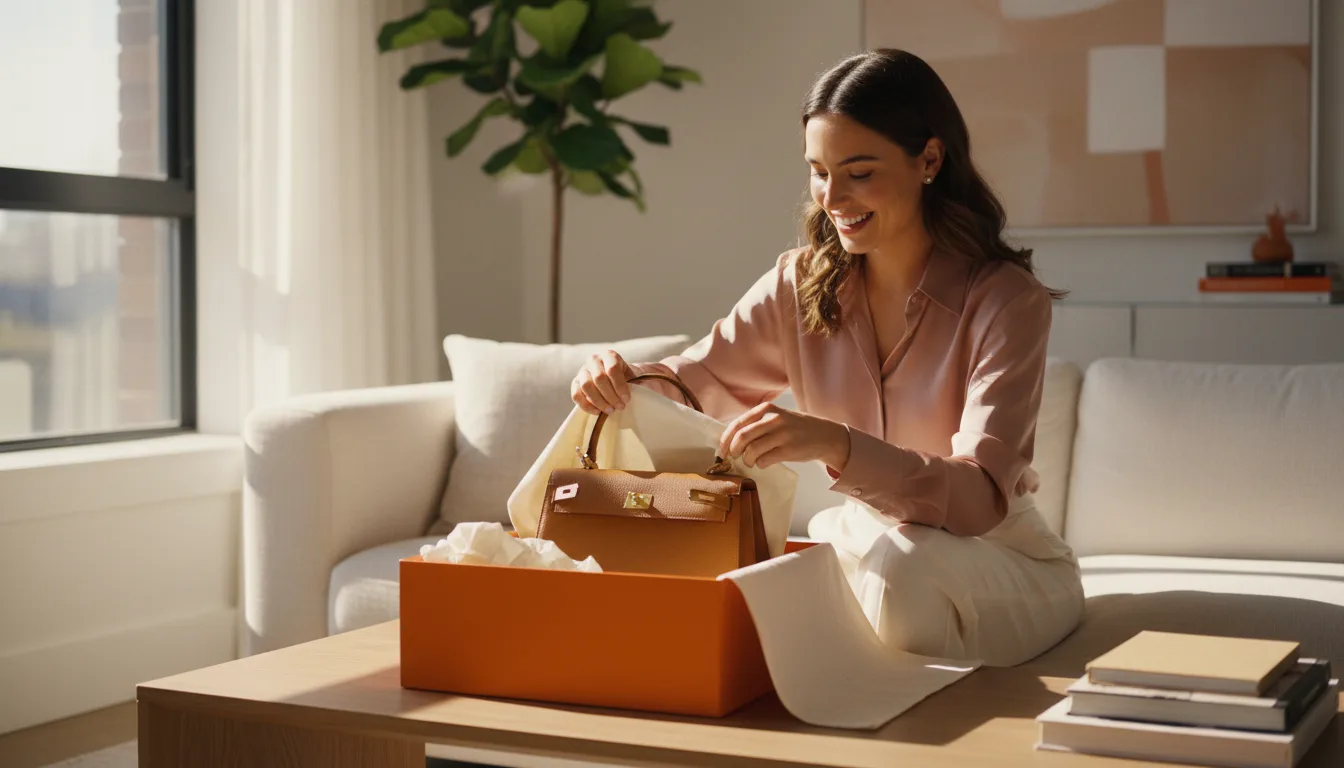
Why Your First Designer Bag Is a Big Deal (And Why It Should Not Be Stressful)
Buying your first luxury handbag is a milestone — it is the moment you invest in quality craftsmanship that you will carry every day, not just something functional that holds your belongings. The right first bag introduces you to what genuine leather, precision hardware, and thoughtful design actually feel like. Once you carry a well-made bag, you will understand why millions of women never go back.
But here is what nobody tells first-time buyers: you do not need to spend $1,000+ to get a genuinely excellent designer bag. The $300-$500 range offers bags from Coach, Brahmin, Kate Spade, and Frye that rival the quality of bags twice their price. The most common mistake first-time buyers make is overspending before they know what they actually want.
This guide helps you avoid that mistake. We will walk you through setting a realistic budget, choosing the right style for your life, and selecting a bag you will still love carrying years from now.
Step 1: Set a Realistic Budget
The sweet spot for a first designer handbag is the $300-$500 range. Here is why:
- Under $300: You can still get quality at this price — the Dooney & Bourke Gretta and Frye Melissa Shopper both live here. But options narrow significantly, and most bags at this price use coated canvas rather than full leather.
- $300–$500 (recommended): This is the goldilocks zone. You get genuine leather construction, recognizable brand names, and craftsmanship that will last for years. The MK Kensington, Brahmin Duxbury, Kate Spade Knott Hobo, and Coach Tabby 26 all live here.
- $500–$1,000: Premium brands become accessible. If you have a larger budget and already know the style you want, the LV Pochette Accessoires or Gucci GG Belt Bag are phenomenal entry points into iconic luxury brands.
- $1,000+: Reserved for buyers who have done their homework and know exactly what they want. At this price, you are buying investment-grade luxury from Gucci, Prada, or Ferragamo. Save this tier for your second or third bag.
The one-year test: Before buying, ask yourself: "Will I still want to carry this bag one year from now?" If the answer is not an enthusiastic yes, wait. A great first designer bag should feel timeless, not trendy. Trends change every season — classic styles do not.
Step 2: Choose a Style That Matches Your Daily Life
Your first bag should match how you actually live, not how you wish you lived. Be honest about your daily routine:
If You Carry a Lot (Laptop, Documents, Gym Clothes)
Best for Heavy Carry: Frye Melissa Shopper
Under $300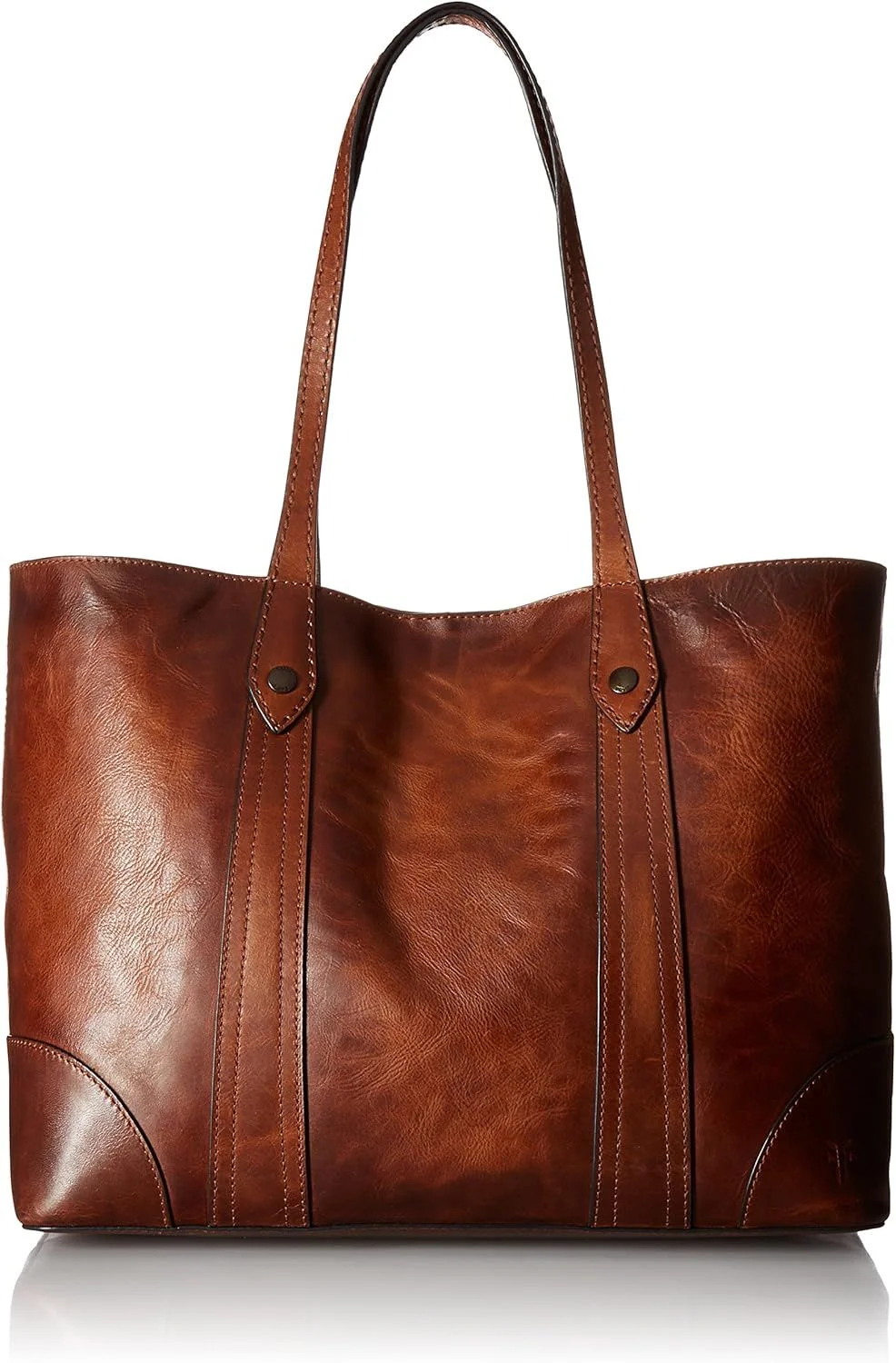
You need a tote. The Frye Melissa Shopper is the standout choice — 17 inches wide, full-grain Italian leather, and the best leather quality per dollar in our catalog. It comfortably fits a 15-inch laptop, lunch, and a full work setup. The pull-up leather develops a beautiful patina with daily use, meaning your bag actually looks better over time.
If You Carry Just the Essentials (Phone, Wallet, Keys)
Best for Essentials: Coach Tabby 26
$300–$500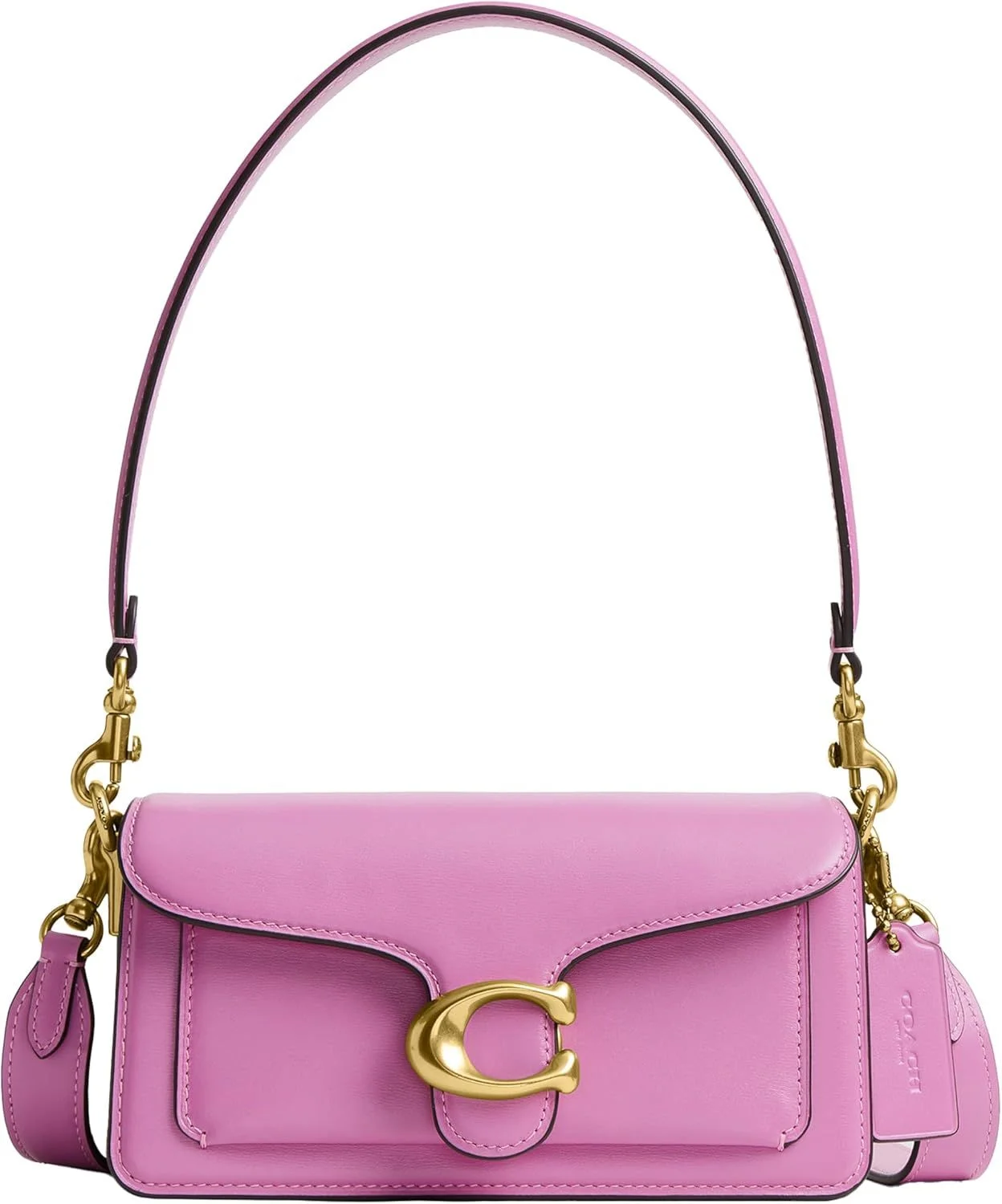
A medium shoulder bag with a crossbody option gives you maximum versatility. The Coach Tabby 26 is our top pick for first-time buyers — the sculpted brass C closure is instantly recognizable, the smooth calf leather feels premium, and the detachable crossbody strap lets you switch between shoulder and hands-free carry.
If You Want Structure and Polish
Best for Structure: Brahmin Duxbury
$300–$500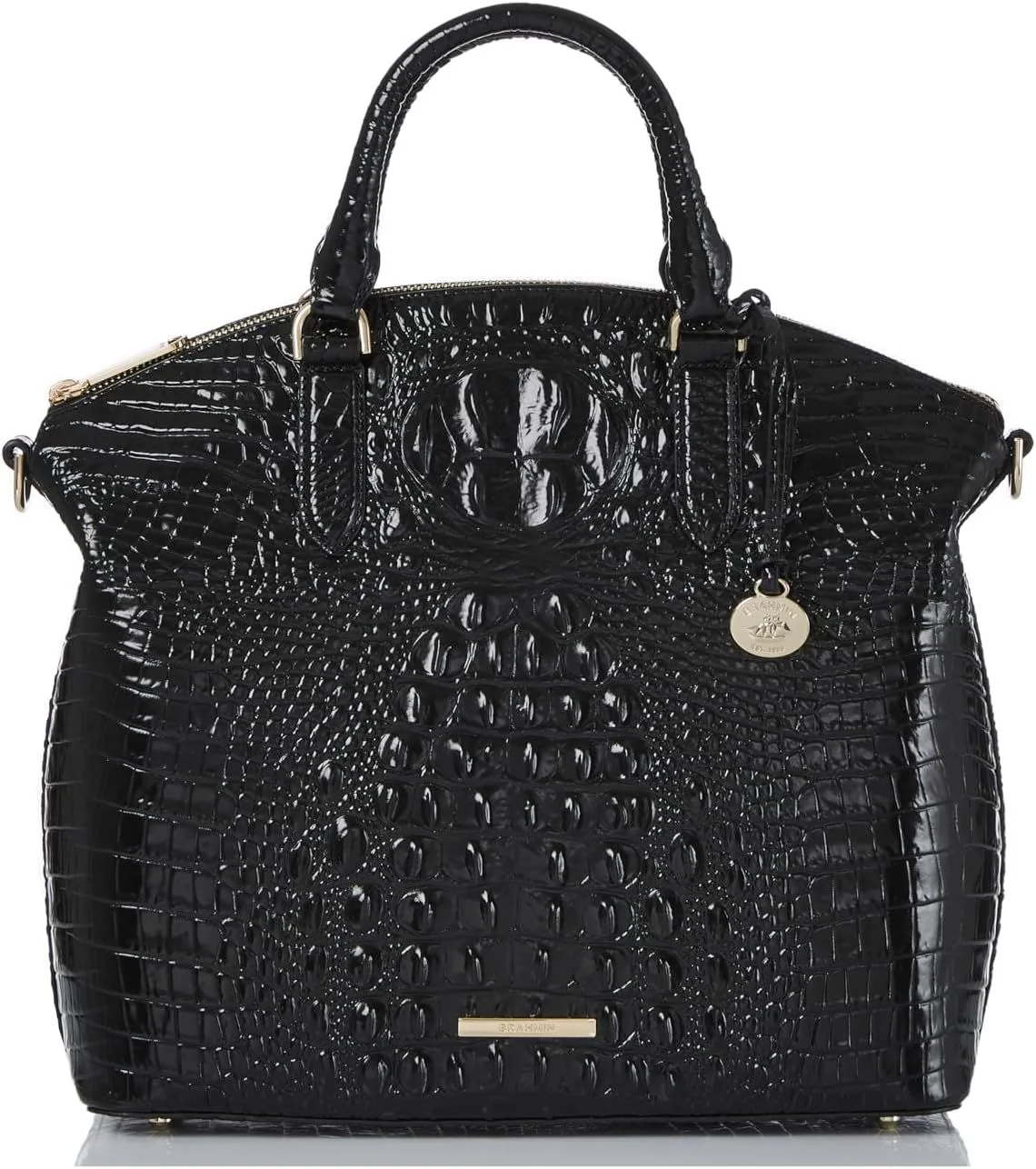
A dome satchel projects confidence and professionalism. The Brahmin Duxbury delivers croc-embossed leather that catches light beautifully, a dome shape that holds its structure perfectly, and gold feet that protect the bottom. The detachable crossbody strap adds commuter versatility.
If You Want a Relaxed, Everyday Feel
Best for Everyday: Kate Spade Knott Hobo
$300–$500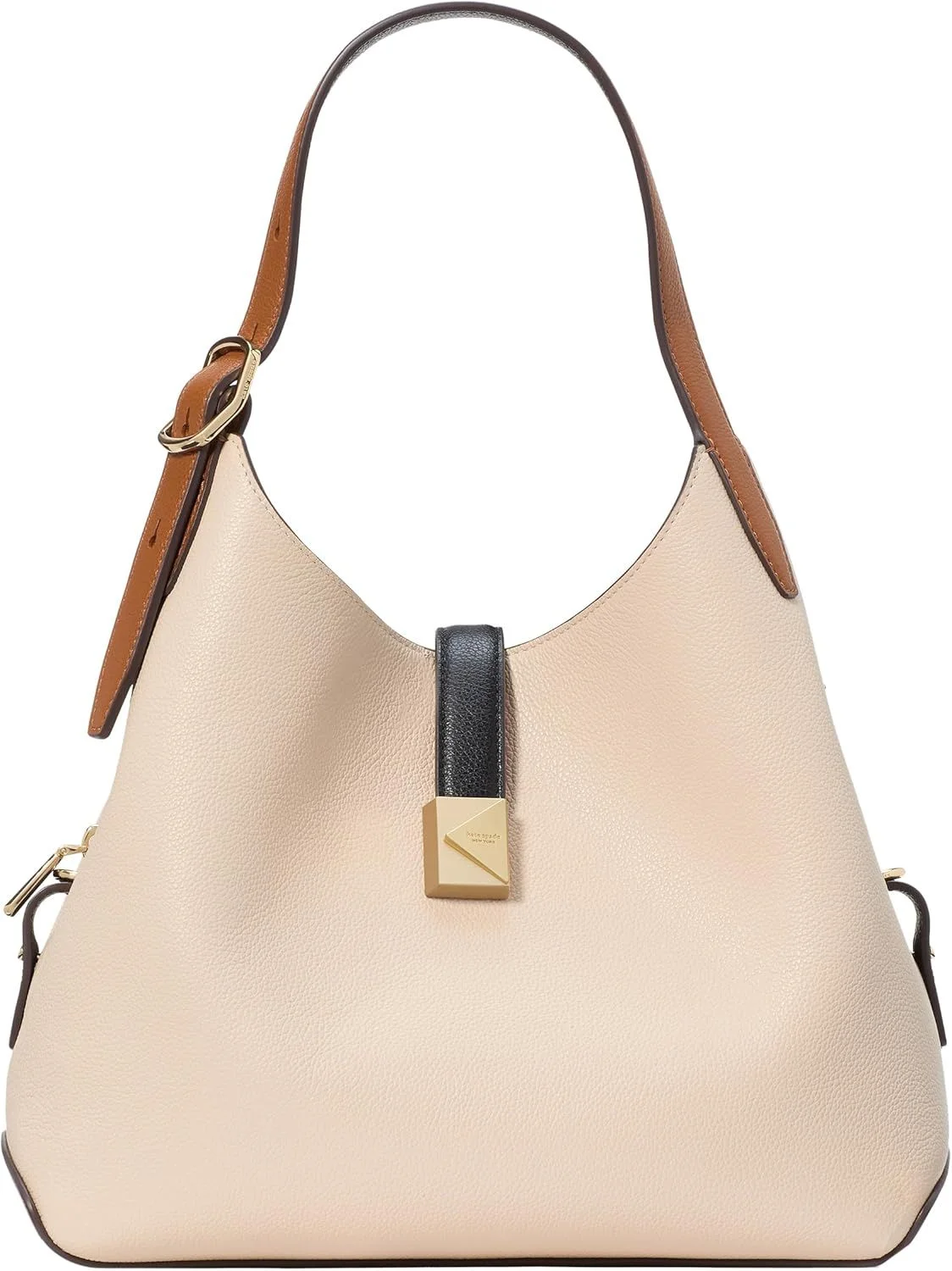
A hobo bag offers comfort and effortless style. The Kate Spade Knott Hobo has a tri-color colorblock design that matches virtually any outfit, soft pebbled leather that ages gracefully, and a slouchy shape that feels natural and relaxed. It is the bag you grab without thinking — which is exactly what your first designer bag should be.
Before buying, think about how you carry your current bag. If you always sling it over one shoulder, a shoulder bag or hobo is your natural style. If you prefer bags across your body, prioritize crossbody-convertible options. If you naturally carry by hand, a structured satchel or top-handle fits your instincts. Your first designer bag should amplify your natural carrying habit, not fight it.
Step 3: Choose a Color You Will Not Regret
For a first designer bag, we strongly recommend a neutral color — specifically black or cognac brown. Here is the reasoning:
Black is the most versatile option. It pairs with every outfit in your closet, hides wear and dirt, works across all seasons, and transitions seamlessly from day to night. If you can only own one designer bag, make it black.
Cognac brown is the second most versatile. It adds warmth to neutral outfits, looks rich with denim and earth tones, and ages beautifully as the leather develops patina. If your wardrobe is predominantly black, a cognac bag creates pleasing contrast.
Bold colors (pink, red, white) are exciting but limiting. The vivid pink Coach Tabby 26 in our catalog is beautiful — but it does not pair with as many outfits as the same bag in black. Save bold colors for second or third bags when you already have a neutral staple.
White and cream bags require extra care. Light-colored leather shows dirt, denim transfer, and makeup stains. If you choose a light color for your first bag, be prepared for more frequent cleaning and more careful handling. Dark colors are significantly more forgiving for everyday use.
Step 4: Understand the Brand Landscape
Not all luxury brands are created equal, and the best brand for your first bag depends on what you value most — brand prestige, material quality, or value for money.
Best Value for Money: Frye and Brahmin
Frye (under $300 for the Melissa Shopper) delivers the best raw leather quality per dollar. Full-grain Italian pull-up leather that develops character with age. Zero logo branding — this is for people who care about what the bag is made of, not what name is on it.
Brahmin (in the $300-$500 range for the Duxbury Satchel) delivers the best presentation per dollar. The Melbourne croc-embossed leather looks genuinely expensive, and the construction quality rivals brands at three times the price. Brahmin has a passionate following among handbag enthusiasts who value craftsmanship over logo prestige.
Best Brand Recognition: Coach and Kate Spade
Coach (in the $300-$500 range for the Tabby 26) has undergone a dramatic brand elevation in recent years. The Tabby line, in particular, has been embraced by fashion editors and celebrities. Coach's sculpted C hardware is instantly recognizable, and the smooth calf leather feels genuinely premium. At under $500, it is the strongest combination of brand prestige and quality in the accessible luxury tier.
Kate Spade (in the $300-$500 range for the Knott Hobo) offers a playful, polished aesthetic that resonates with younger buyers. The brand's colorblock designs and gold hardware are distinctive without being loud. Kate Spade is an excellent choice if you want a bag that is clearly designer but approachably so.
Best Entry to Premium Luxury: Michael Kors and Dooney & Bourke
Michael Kors (in the $300-$500 range for the Kensington) offers the most accessible price point with globally recognized brand presence. The MK brand is subtly applied (a small charm rather than all-over logos), and the pebbled leather quality is solid for the price. Excellent if brand recognition matters on a tighter budget.
Dooney & Bourke (under $300 for the Gretta Satchel) is the most affordable entry point. The coated canvas is water-resistant and easy to maintain — ideal for someone who wants a designer bag they do not have to baby. The DB monogram is sophisticated without being ostentatious.
Coach Factory, Michael Kors Outlet, and Kate Spade Surprise are separate product lines made specifically for outlet stores. They use different materials and construction than the mainline products. Every bag in our catalog is a mainline product — never outlet-specific. When shopping, verify the product is from the main collection, not an outlet-exclusive line. The quality difference is significant.
What Your First Bag Will Teach You
Your first designer bag is not just a purchase — it is a learning experience. After carrying it for a few months, you will discover:
- Your ideal size: Is it too big? Too small? You will know within a week whether you need more or less capacity.
- Your carrying preference: Do you reach for the shoulder strap or the crossbody strap more often? This tells you what style to prioritize next.
- Your color preference: Did you wish it matched more outfits? Did you get bored with the neutral color and crave something bold? Both reactions inform your next purchase.
- Your maintenance tolerance: Are you the type to condition leather regularly, or do you want something you can throw around? This determines whether your next bag should be delicate (suede, smooth calfskin) or durable (saffiano, nylon).
This is why we recommend starting in the $300-$500 range — it is enough to experience genuine quality without the pressure of a four-figure investment. Once you know your preferences, your second and third bags become much smarter purchases.
5 First-Timer Mistakes to Avoid
Mistake 1: Buying the Most Expensive Bag You Can Afford
Stretching to $1,500+ for a Prada as your first bag is risky. If you discover you prefer a different size, style, or carrying mode, you have an expensive lesson in your closet. Start in the $300-$500 range, learn your preferences, then invest in a premium bag with confidence. The Coach Tabby 26 gives you 80% of the quality of bags twice the price.
Mistake 2: Choosing Trendy Over Timeless
The viral bag on social media looks exciting now — but trends change every six months. Your first designer bag should be a classic shape in a versatile color that you will still love in three years. Save trend-chasing for bag number four or five, when you have a solid wardrobe foundation to experiment from.
Mistake 3: Ignoring the Return Policy
Always buy from a source with a generous return policy for your first designer bag. Amazon offers 30-day returns, which gives you time to live with the bag and confirm it fits your lifestyle. Some boutiques and third-party sellers have strict no-return policies — avoid them for a first purchase.
Mistake 4: Skipping Authentication Research
Counterfeits exist at every price point. Before buying from any seller, read our authentication guide to learn what to look for in both the seller profile and the physical product. Five minutes of verification prevents a disappointing purchase.
Mistake 5: Not Planning for Care
A designer bag is only as good as the care it receives. Budget an extra $40-60 for basic care supplies: leather conditioner ($12-18), rain protectant spray ($10-15), dust bag for storage (usually included), and a purse hook ($10-15). This small investment dramatically extends the life and appearance of your bag. See our care guide for details.
Our Top 3 Recommendations for a First Designer Bag
Best Overall First Bag: Coach Tabby 26
$300–$500The Coach Tabby 26 is our number one recommendation for first-time luxury handbag buyers. It delivers premium smooth calf leather, an iconic brass closure, shoulder-to-crossbody versatility, and genuine brand prestige — all under $500. It is the bag that teaches you what real quality feels like without requiring a four-figure investment.
Best Value First Bag: Brahmin Duxbury
$300–$500The Brahmin Duxbury delivers exceptional craftsmanship in the $300–$500 range. The Melbourne croc-embossed leather looks and feels expensive, the dome silhouette projects confidence, and the crossbody strap adds everyday practicality. If you want the most bag for your budget, this is it.
Best Leather Quality First Bag: Frye Melissa Shopper
Under $300The Frye Melissa Shopper is for the first-time buyer who cares about material quality above all else. Full-grain Italian pull-up leather that develops a stunning patina — this is leather at its finest, at a price point that seems almost impossible. If you want a bag that gets better with age, start here.
Frequently Asked Questions
What is a good budget for a first designer handbag?
We recommend the $300-$500 range for a first designer handbag. This tier gets you genuine leather quality from reputable brands like Coach (Tabby 26), Brahmin (Duxbury), Kate Spade (Knott Hobo), Michael Kors (Kensington), and Frye (Melissa Shopper). Going below the under-$300 tier risks entering "fashion brand" territory where quality drops significantly. Going above $500 for a first bag is unnecessary until you know your style preferences.
What color should my first designer bag be?
Black is the safest and most versatile first bag color — it pairs with every outfit, hides wear, and works across all seasons and occasions. Cognac brown is the second most versatile, adding warmth to neutral outfits. If your wardrobe is predominantly neutrals, either color works. If you wear a lot of black, choose cognac for contrast. Save bold colors (pink, red, white) for second or third bags once you have a neutral staple.
Should I buy a shoulder bag, tote, crossbody, or satchel first?
A medium-sized shoulder bag with a detachable crossbody strap is the most versatile first purchase. It offers two carrying modes, fits daily essentials without being oversized, and works across casual and semi-formal settings. The Coach Tabby 26 and Brahmin Duxbury both offer this shoulder/crossbody versatility. If you carry a laptop daily, a tote like the Frye Melissa may be more practical as a first bag.
Are Coach and Kate Spade considered luxury?
Coach and Kate Spade occupy the "accessible luxury" tier — genuine designer brands with quality materials and craftsmanship, positioned below ultra-luxury houses like Gucci, Prada, and Louis Vuitton. Coach has significantly elevated its brand in recent years; the Tabby line uses premium smooth calf leather and has been worn by celebrities and featured in Vogue. Both brands are excellent entry points that deliver real quality without the premium price tag.
Is it worth saving up for a Gucci or Prada as a first bag?
Only if you are certain about the style you want. A $1,000+ Gucci Soho is a wonderful bag — but if you buy it and discover you prefer totes over shoulder bags, you have an expensive bag gathering dust. We recommend starting in the $300-$500 range to learn your preferences (size, style, carrying mode, color), then investing in a premium brand for your second or third bag when you know exactly what you want. The exception: if you have tried friends' bags extensively and know your preferences already.
How can I tell if a designer bag is good quality?
Five quality markers to check: (1) Stitching should be straight, even, and tight with no loose threads. (2) Hardware should feel heavy and operate smoothly — no wobble or grinding. (3) Leather should smell natural, not chemical or plasticky. (4) Zippers should glide without catching. (5) The interior should have branded lining, clean construction, and functional pockets. Every bag in our catalog passes all five markers.
Where is the best place to buy my first designer bag?
Amazon offers competitive prices, buyer protection, and easy returns for designer handbags. Verify the seller is reputable (95%+ rating, established history) and the listing shows detailed product photos. For authentication guidance, see our Amazon authentication guide. Department stores (Nordstrom, Saks) offer in-person inspection. Brand boutiques guarantee authenticity but rarely offer discounts. For first-time buyers, Amazon's 30-day return policy provides the most flexibility to change your mind.
Ready to Find Your First Bag?
Your first designer handbag should make you feel confident every time you pick it up. Start by reading the reviews for our top three recommendations above, or browse our full catalog organized by style in the resource hub.
If budget is your primary concern, our handbags by budget guide organizes every bag by price tier. If you want to understand materials before buying, our materials guide explains every leather and fabric type in plain language.