Designer Handbag Materials Explained
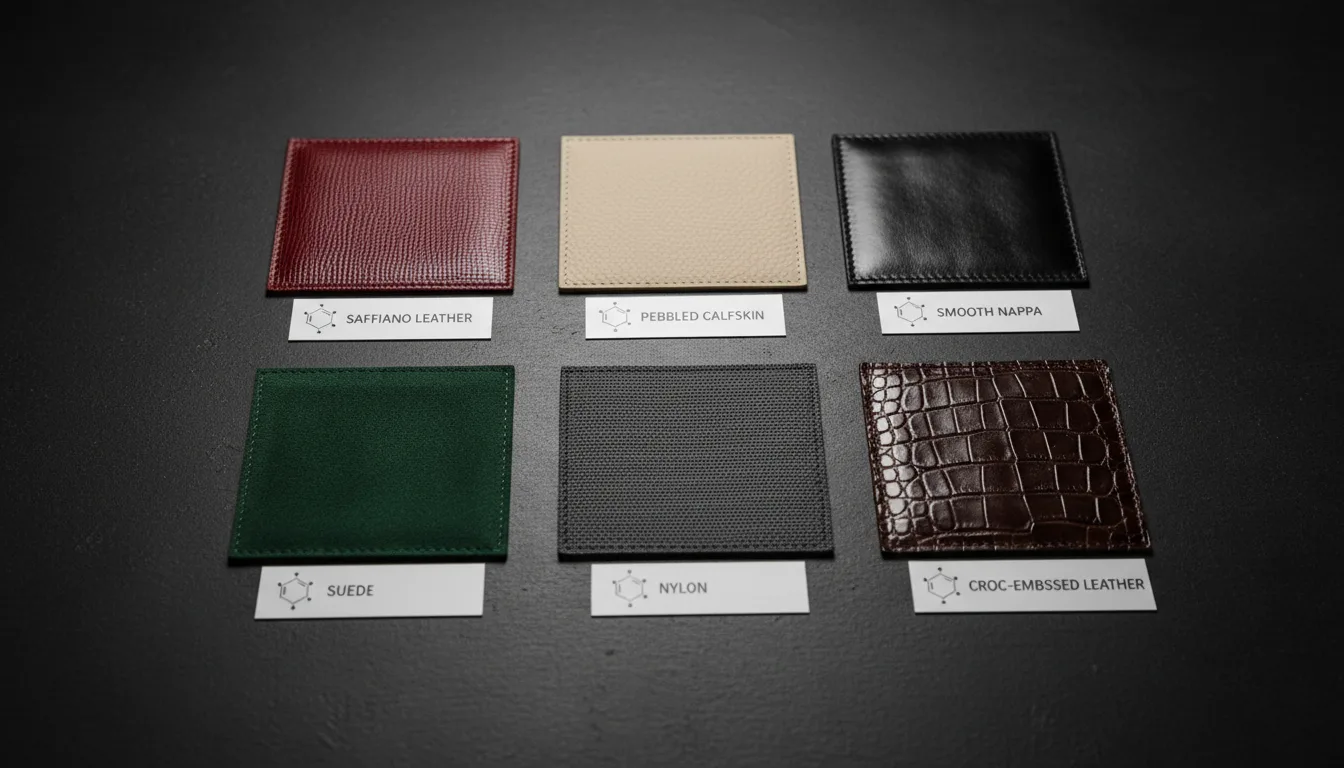
The material defines how a luxury handbag looks, feels, ages, and survives daily life. This guide breaks down every major material used in designer handbags — from Prada's signature saffiano to FENDI's knitted cashmere — and ties each one to specific bags in our catalog so you know exactly what you are buying.
Why Material Matters More Than Brand Name
Two bags at the same price from the same brand can use completely different materials with completely different lifespans. A $1,000+ Prada bag in tessuto nylon will outlast decades of rain and daily commuting. A similarly priced bag in delicate suede might show visible wear within months if not handled carefully. The brand name is the same — the material is the deciding factor.
Understanding materials also helps you spot value and avoid overpaying. When you know that the Frye Melissa Shopper uses full-grain Italian pull-up leather — the same grade used in bags costing $500-$1,000+ — you can see where the real value lies. Conversely, knowing that coated canvas costs less to produce than leather helps explain why some monogram bags are priced lower than plain leather alternatives from the same brand.
We have organized this guide from most durable to most delicate, with care requirements and real products for each material type.
Premium Leathers
Saffiano Leather — The Indestructible Standard
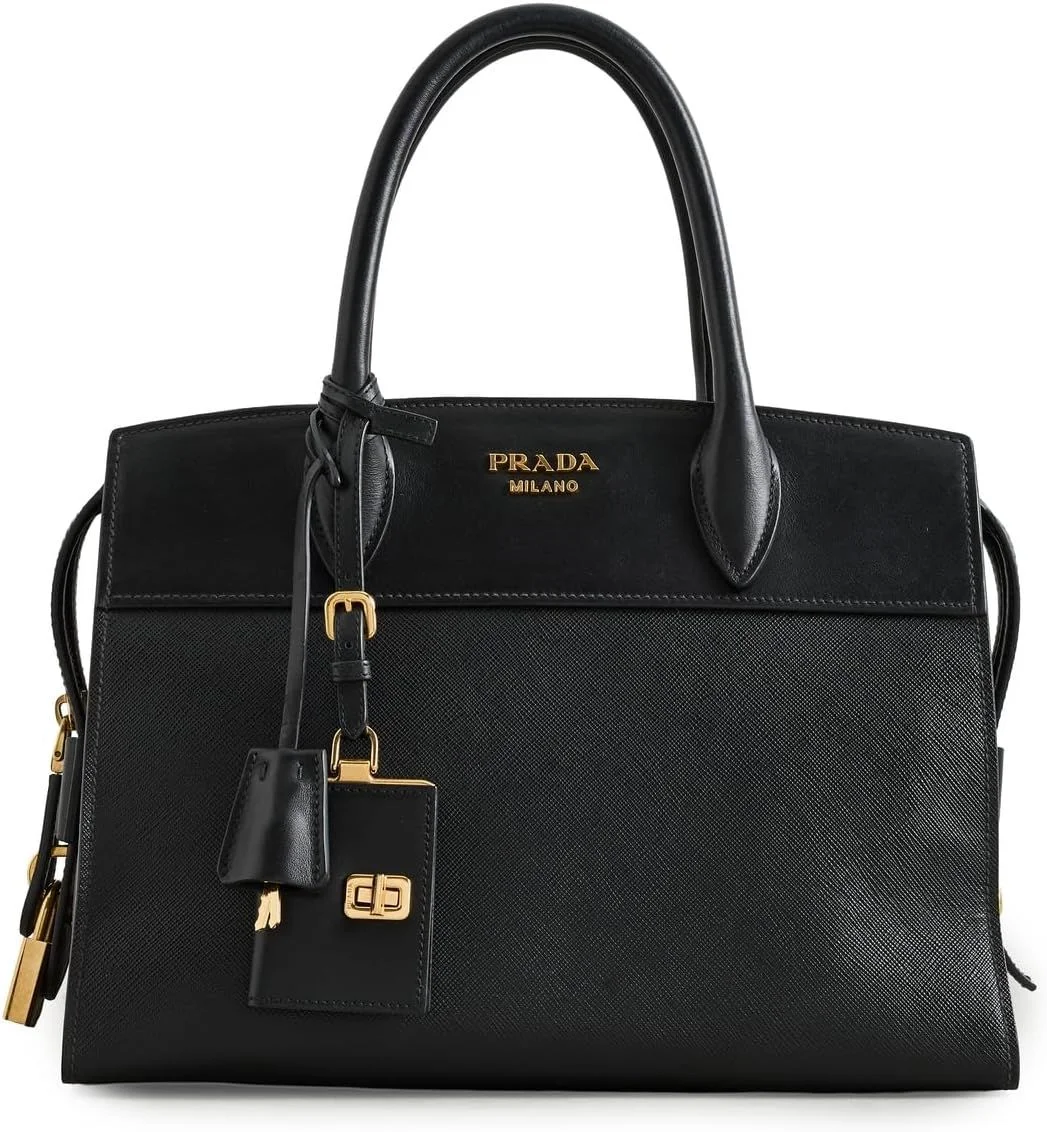
Saffiano leather was invented by Mario Prada in 1913 and remains Prada's signature material over a century later. The leather is treated with a wax finish and then heat-stamped with a distinctive diagonal cross-hatch pattern. The result is a surface that resists scratches, water, stains, and color transfer better than any other leather in the luxury market.
Feel: Firm and slightly rigid with a textured, almost papery surface. Saffiano does not have the soft, buttery feel of calfskin — it trades softness for near-indestructibility.
Aging: Saffiano maintains its appearance remarkably well. A five-year-old saffiano bag can look nearly identical to a new one. It does not develop a patina like pull-up leather — it simply stays the same, which is either a strength or a limitation depending on your preferences.
Maintenance: Minimal. Wipe with a damp cloth as needed. Conditioning is optional — the wax finish protects the leather naturally. Keep away from sustained heat, which can soften the wax layer.
In our catalog: The Prada Esplanade Saffiano Leather Top-Handle Bag ($1,500–$2,500) showcases saffiano at its best — dual-textured with smooth calfskin accents.
Genuine saffiano leather is so scratch-resistant that you can run a fingernail firmly across the surface with no visible mark. If a bag labeled "saffiano" shows scratch marks from a fingernail test, it is using an inferior stamping process on lower-quality leather. This is one of the quickest authentication and quality tests you can perform.
Vitello Phenix — Prada's Toughest Hide
Vitello Phenix is Prada's pebbled calfskin leather — engineered for maximum durability while maintaining a softer hand than saffiano. The natural grain is tumbled to create an irregular pebbled texture that hides minor scratches and scuffs. It is Prada's most practical leather for everyday bags.
Feel: Softer and more supple than saffiano, with a textured pebbled surface. It has more natural give and drape.
Aging: Develops a subtle softening over time but resists visible wear well. The pebbled surface means scratches blend into the texture rather than standing out.
Maintenance: Apply leather conditioner every 3-4 months. The pebbled surface is somewhat water-resistant but benefits from a protective spray in rainy climates.
In our catalog: The Prada Vitello Phenix Leather Shopping Tote ($1,500–$2,500) — a bold red tote that demonstrates Vitello Phenix's rich color saturation.
Pebbled Calfskin — The Everyday Workhorse
Pebbled calfskin is the most common leather in accessible luxury handbags. The surface is textured through either natural tumbling or embossing, creating a bumpy surface that resists scratches and ages gracefully. Nearly every major luxury brand uses some form of pebbled calfskin.
Feel: Soft, supple, and comfortable. The pebbled texture gives it a satisfying tactile quality.
Aging: Softens and develops a gentle patina with use. Minor scratches and scuffs are largely hidden by the textured surface.
Maintenance: Condition every 3-4 months. Wipe down with a dry cloth after exposure to moisture. Avoid prolonged contact with denim or dark fabrics (can cause color transfer on light-colored pebbled leather).
In our catalog: The Gucci Soho Flap ($1,000–$1,500), Gucci Interlocking GG ($1,000–$1,500), MK Kensington ($300–$500), Kate Spade Knott Hobo ($300–$500), and Ferragamo Studio Box ($1,500–$2,500) all use pebbled calfskin.
Smooth Calfskin — The Luxury Standard
Smooth calfskin is the classic luxury leather — uniform, sleek, and beautiful. It is made from the finest part of the calf hide with a polished, even surface. It is the default material for premium hardware-focused bags where the leather is a clean backdrop for metallic accents.
Feel: Buttery smooth with a slight sheen. The most luxurious tactile experience of any standard leather.
Aging: Develops a visible patina relatively quickly, which some find desirable and others consider wear. More prone to scratches and scuffs than pebbled or saffiano.
Maintenance: Requires the most care of any leather type. Condition monthly, protect from rain, and avoid contact with rough surfaces. Scratches can sometimes be buffed out with leather cream.
In our catalog: The Coach Tabby 26 ($300–$500) features smooth calf leather that feels premium and looks beautiful — but requires more careful handling than pebbled alternatives.
Italian Pull-Up Leather — The Heritage Choice
Pull-up leather is full-grain leather treated with oils and waxes that create a distinctive two-tone effect when the leather is bent or stretched. The oils migrate, revealing lighter tones beneath the surface. This is the leather that leather enthusiasts obsess over because it develops the most beautiful patina of any material.
Feel: Rich, waxy, and substantial. It has a distinctive natural feel that immediately distinguishes it from treated or coated leathers.
Aging: Transforms dramatically over time — developing deep color shifts, rich patina, and character marks that make each bag unique. A well-used pull-up leather bag at 3 years looks better than it did new.
Maintenance: Minimal — the oils and waxes self-protect the leather. Occasional conditioning enriches the patina. Scratches can be rubbed out with your thumb (the oils redistribute).
In our catalog: The Frye Melissa Shopper (Under $300) uses antique pull-up Italian leather with brass rivets — by far the best leather quality per dollar in our catalog.
Patina lover? Choose pull-up leather (Frye Melissa) or vachetta leather (LV Pochette). These materials reward daily use with increasingly beautiful color depth. If you prefer bags that look identical year after year, choose saffiano (Prada Esplanade) or coated canvas (LV monogram).
Croc-Embossed Leather — The Exotic Alternative
Croc-embossed leather is genuine cowhide stamped with a crocodile pattern through heat and pressure. It provides the visual drama of exotic leather without the ethical concerns, five-figure price tag, or extreme fragility of real crocodile skin.
Feel: Firm and textured, with defined scale patterns. Higher-quality embossing (like Brahmin's Melbourne) has deep, detailed scales that catch and reflect light beautifully.
Aging: Maintains its pattern well over time. The embossed texture hides minor wear better than smooth leather.
Maintenance: Similar to pebbled leather — condition quarterly, protect from water, and wipe down regularly.
In our catalog: The Brahmin Duxbury ($300–$500) features Brahmin's Melbourne croc-embossed finish, which is widely regarded as one of the most realistic and beautiful embossings in the industry.
Alternative Premium Materials
Suede — The Texture Statement
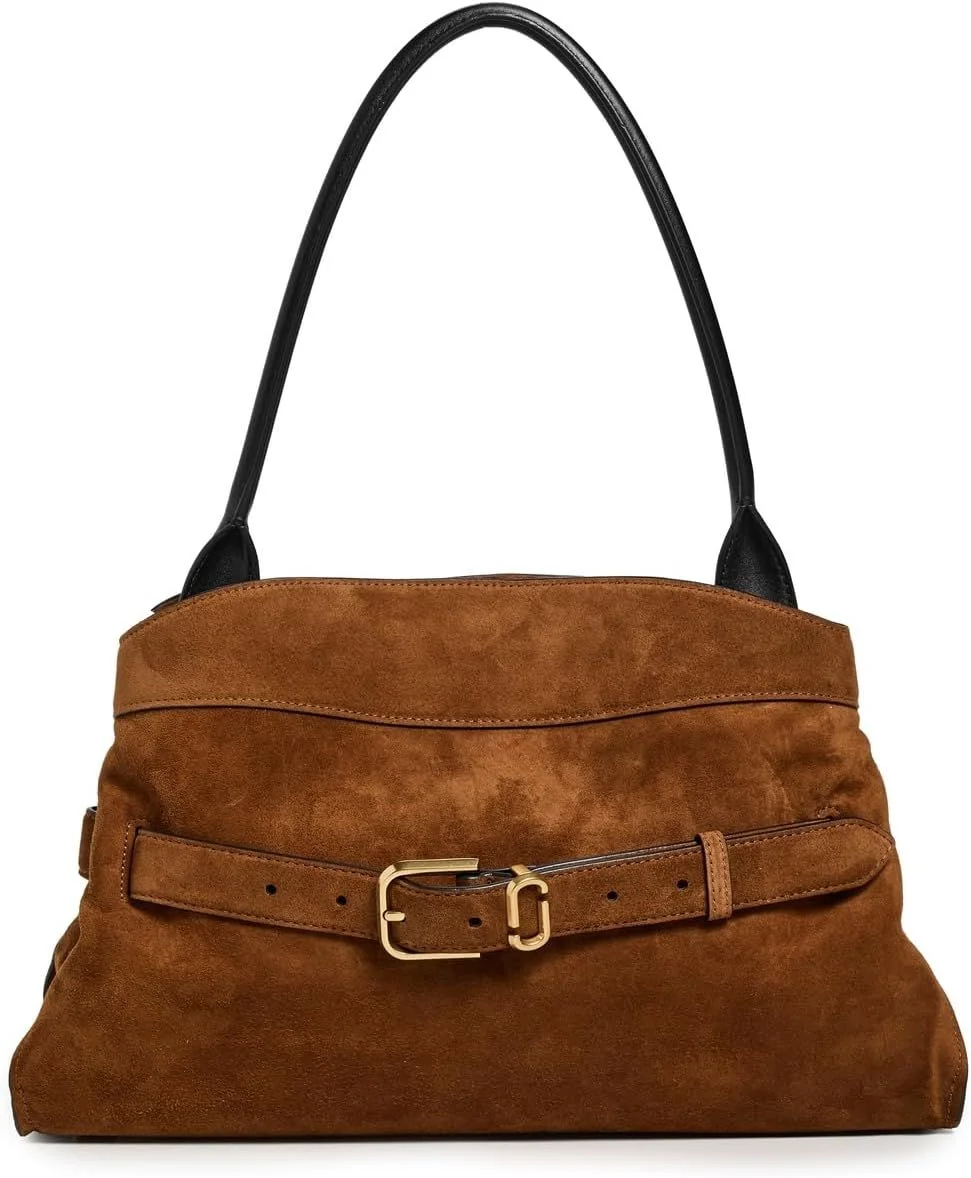
Suede is the inner side of a leather hide, brushed to create a soft, napped surface. It adds warmth and textural richness that no smooth leather can match. However, it is the most maintenance-intensive material in the luxury handbag world.
Feel: Incredibly soft with a velvety, plush texture. Running your hand across suede is one of the most tactilely satisfying experiences in fashion.
Aging: Develops a worn, vintage aesthetic over time. The nap flattens in high-contact areas and can show water marks, oil stains, and color fading. Some find this aging charming; others find it unacceptable.
Maintenance: The highest of any material. Spray with suede protector before first use. Brush regularly with a suede brush. Avoid water, oil, and dark fabrics. Store in a dust bag. Professional cleaning recommended annually for regular use.
In our catalog: The Marc Jacobs Belted ($300–$500) — rich brown suede with black leather trim, creating a warm bohemian aesthetic that is worth the maintenance commitment.
Tessuto Nylon — Prada's Lightweight Pioneer
Prada introduced luxury nylon handbags in the 1980s, revolutionizing the industry's material hierarchy. Tessuto is Prada's proprietary nylon fabric — a tightly woven, military-grade nylon that was originally developed for parachutes. It is the ultimate functional luxury material.
Feel: Lightweight, smooth, and slightly slippery. It has a technical, modern feel that differs completely from leather.
Aging: Virtually does not age. A ten-year-old tessuto bag can look identical to a new one. The material resists fading, stretching, and wear in a way that no natural material can match.
Maintenance: Almost none. Wipe with a damp cloth. Machine washable in a gentle cycle (though hand washing is safer). Dries quickly and resists water, stains, and UV damage.
In our catalog: The Prada Tessuto Nylon ($1,000–$1,500) — the quintessential nylon luxury bag, with calf leather trim and gold hardware that elevates the technical fabric.
Tessuto nylon bags weigh roughly half as much as equivalent leather bags. The Prada Tessuto Nylon weighs just 1 lb — compared to 1.8 lbs for the leather Prada Vitello Phenix and 2.1 lbs for the Prada Esplanade. For travelers and commuters who carry bags all day, the weight difference is physically noticeable after a few hours.
Coated Canvas — The Durable Classic
Coated canvas is a fabric base (cotton or linen) coated with PVC, polyurethane, or a proprietary finish. Louis Vuitton's monogram canvas and Gucci's GG Supreme canvas are the two most famous examples. The coating makes the canvas waterproof, scratch-resistant, and extremely long-lasting.
Feel: Stiff and smooth with a slightly plasticky touch. It lacks the warmth of leather but provides a sleek, clean surface.
Aging: Maintains its appearance for decades with virtually no change. The coating prevents fading, staining, and water damage. On LV bags, the vachetta leather trim ages while the canvas stays pristine — creating an appealing contrast.
Maintenance: The lowest of any material. Wipe with a damp cloth. No conditioning required. Essentially indestructible under normal use.
In our catalog: The LV Pochette Accessoires ($500–$1,000) uses LV monogram coated canvas, the Gucci GG Belt Bag ($500–$1,000) uses Gucci's original GG canvas, and the Dooney & Bourke Gretta (Under $300) uses DB monogram coated canvas.
Cashmere Wool — The Luxury Textile
Cashmere wool in handbags is exceptionally rare — FENDI is one of the very few luxury houses that uses it. Knitted cashmere creates an incredibly soft, lightweight textile that looks and feels unlike anything else in the handbag market. It is pure luxury — and requires careful handling.
Feel: Impossibly soft, warm, and light. Picking up the FENDI cashmere shopper for the first time is a genuinely surprising tactile experience — it weighs almost nothing.
Aging: Cashmere can pill with friction, stretch with heavy loads, and absorb moisture permanently. It requires mindful use and is not suitable for rough daily wear.
Maintenance: Store flat or stuffed to maintain shape. Avoid rain and liquid. Spot clean only — never machine wash. Use a cashmere comb for any pilling. Keep away from Velcro, rough jewelry, and abrasive surfaces.
In our catalog: The FENDI Cashmere Shopper ($2,500+) — the only cashmere bag in our catalog, weighing just 1 lb despite its massive 21.5-inch width.
Lamb Fur — The Statement Material
Lamb fur is used in select luxury pieces for its dramatic visual impact. It is soft, visually striking, and unmistakably bold. Like cashmere, it is a material for carefully planned occasions rather than daily use.
Feel: Dense, plush, and luxurious. The fur has natural body that gives the bag dimension and movement.
Aging: Can mat, flatten, or shed if not stored and handled properly. Professional cleaning is essential for long-term maintenance.
Maintenance: Professional fur cleaning only. Store in breathable (not plastic) garment bags. Brush gently with a soft brush. Keep away from heat, moisture, and direct sunlight.
In our catalog: The FENDI Fendigraphy Leopard ($2,500+) — leopard print lamb fur combined with leather trim, creating a collector-grade statement piece.
Satin — The Evening Fabric
Satin is a weave (not a fiber) that produces a smooth, glossy surface by exposing long floats of thread to the exterior. In luxury evening bags, satin provides the light-catching sheen that sparkles under event lighting.
Feel: Silky, smooth, and cool to the touch. Satin has a refined, delicate quality that signals formal elegance.
Aging: Extremely delicate. Satin snags, stains, and water-marks easily. It is not a material for daily use — strictly for evening and formal occasions.
Maintenance: Spot clean only. Store in a dust bag with tissue paper. Avoid contact with perfume, makeup, and lotions. Keep fingernails smooth to prevent snags.
In our catalog: The Versace Medusa Clutch ($1,000–$1,500) — black satin combined with smooth leather and the gold Medusa emblem.
Hand-Crocheted Cotton/Polyester — The Artisan Material
Hand-crocheted construction creates bags with artisan character — each piece is slightly unique. The open-weave structure makes these bags breathable and lightweight, perfect for warm weather and resort settings.
Feel: Textured, flexible, and lightweight. The crochet construction has natural stretch and give.
Aging: Can stretch with heavy loads and is susceptible to snags. The open weave means small items can slip through. Not a year-round material.
Maintenance: Spot clean with mild soap. Reshape while damp. Avoid hanging by straps for extended periods (can stretch). Store flat.
In our catalog: The Tory Burch Ella Crochet ($300–$500) — hand-crocheted with the raised double-T logo, designed for summer and vacation use.
Material Comparison at a Glance
Durability rankings (most to least durable for daily use): Saffiano leather > Coated canvas > Tessuto nylon > Vitello Phenix > Pebbled calfskin > Pull-up leather > Smooth calfskin > Croc-embossed leather > Suede > Satin > Cashmere > Lamb fur. Your ideal material depends on your lifestyle — a commuter needs saffiano; a collector can enjoy cashmere.
5 Material Mistakes to Avoid
Mistake 1: Choosing Suede for a Daily Bag
Suede is beautiful but fragile. If your bag will encounter rain, coffee shops, public transit, and desk surfaces daily, suede will show wear within weeks. Save suede for second or third bags that you rotate for specific occasions and outfits. For daily use, choose saffiano, pebbled calfskin, or nylon.
Mistake 2: Expecting Patina from Saffiano
Saffiano leather is designed to look the same for years. If you want a bag that evolves and develops character with use, you need pull-up leather (Frye Melissa) or vachetta trim (LV Pochette). Saffiano's strength is consistency — its limitation is that it never develops the warm, aged look that some buyers desire.
Mistake 3: Dismissing Nylon as "Not Luxury"
Prada's tessuto nylon was a deliberate design choice, not a cost-cutting measure. It revolutionized the industry by proving that luxury is about design, craftsmanship, and brand vision — not just leather. A $1,000+ Prada Tessuto bag carries just as much prestige as a leather alternative from a lesser brand. Do not let material snobbery prevent you from choosing the most practical option for your lifestyle.
Mistake 4: Ignoring Color and Material Interactions
Light colors (white, cream, blush) show dirt and color transfer on every material type — but suede and smooth calfskin are especially vulnerable. The cream panel on the Kate Spade Knott Hobo requires more careful handling than the black panels. If you want a light-colored bag, choose saffiano or coated canvas — they are the easiest light-colored materials to keep clean.
Mistake 5: Not Matching Material to Climate
If you live in a rainy climate, avoid suede, satin, and untreated leather as primary bags. If you live in a humid environment, avoid cashmere and lamb fur (moisture promotes degradation). If you live in a very hot climate, avoid saffiano (the wax finish can soften in sustained heat). Match your material to your environment for maximum longevity.
Frequently Asked Questions
What is the most durable luxury handbag material?
Saffiano leather is the most durable luxury handbag material available. Invented by Prada, the cross-hatched heat-stamped finish resists scratches, water, stains, and color transfer. A saffiano bag like the Prada Esplanade can look nearly new after a decade of daily use with minimal maintenance. Coated canvas (Louis Vuitton monogram) is a close second, offering water resistance and exceptional longevity.
Is Prada nylon as good as leather?
Prada Tessuto nylon is not "better" or "worse" than leather — it serves a different purpose. Tessuto is lighter (bags weigh half as much as leather equivalents), completely water-resistant, and extremely durable. It does not develop a patina like leather, but it also does not require conditioning or protection from rain. For travel, commuting, and active lifestyles, tessuto often outperforms leather on pure practicality. In the $1,000-$1,500 range for the Prada Tessuto Tote, you are paying for the material engineering, not just the brand name.
What is the difference between full-grain and top-grain leather?
Full-grain leather retains the entire surface of the hide, including natural markings and the strongest fibers. It develops a rich patina over time and is the most durable option. Top-grain leather has the outermost layer sanded off to remove imperfections, then a finish coat is applied. It is smoother and more uniform but does not age as beautifully. The Frye Melissa Shopper uses full-grain Italian pull-up leather; most designer bags use top-grain calfskin.
Is coated canvas cheaper than leather?
Coated canvas is less expensive to produce than full-grain leather, but that does not mean bags made from it are cheap. Louis Vuitton monogram canvas is coated with a PVC-based finish that makes it waterproof and extremely durable. Gucci GG canvas and Dooney & Bourke monogram canvas follow similar processes. The canvas bags in our catalog (under $300 to $500-$1,000) are priced on brand prestige and design, not solely on material cost.
How do I care for suede luxury handbags?
Suede requires more maintenance than any other luxury material. Apply a suede protector spray before first use, keep it away from water and oil, and use a suede brush to remove surface dirt weekly. Store in a dust bag with tissue paper stuffing to maintain shape. Never use leather conditioner on suede — it will darken and flatten the nap. For the Marc Jacobs Belted Suede, professional cleaning is recommended annually if used regularly.
What is croc-embossed leather? Is it real crocodile?
No. Croc-embossed leather is genuine cowhide leather that has been stamped with a crocodile pattern using heat and pressure. It offers the visual texture of exotic leather at a fraction of the cost, without using exotic animal skins. The Brahmin Duxbury's Melbourne croc-embossed finish is one of the most convincing in the industry — the depth and detail of the embossing catches light beautifully. Real crocodile leather bags start at $10,000+ and are not available on Amazon.
Which luxury handbag material requires the least maintenance?
Coated canvas (Louis Vuitton, Gucci GG, Dooney & Bourke) requires the least maintenance. It resists water, scratches, and stains without any treatment. Simply wipe with a damp cloth as needed. Saffiano leather is the lowest-maintenance leather option — its embossed surface resists most damage without conditioning. Tessuto nylon (Prada) is also extremely low-maintenance. At the opposite end, suede and cashmere wool require the most careful handling.
Choose the Right Material for Your Lifestyle
The best material is the one that fits your daily routine. For maximum durability, the Prada Esplanade in saffiano leather is virtually indestructible. For the best value leather, the Frye Melissa Shopper in Italian pull-up leather develops a stunning patina. For lightweight travel, the Prada Tessuto Nylon in tessuto nylon weighs just 1 lb.
For material-specific care instructions, see our Designer Handbag Care Guide. For a full glossary of material and hardware terms, see our Designer Handbag Glossary.