Designer Handbag Care and Maintenance Guide
A luxury handbag is an investment that should last years — or decades — with proper care. The difference between a bag that ages beautifully and one that deteriorates comes down to how you clean, store, and protect it. This guide covers specific care instructions for every material type in our catalog, from saffiano leather to cashmere wool.
The care requirements for a $2,500+ FENDI Cashmere Shopper are radically different from those for an Under $300 Dooney & Bourke Gretta Satchel. A technique that preserves one material can destroy another. This guide organizes care by material type so you can find exactly the right instructions for your specific bag — no generic advice, no guesswork.
Proper care also directly impacts resale value. A well-maintained luxury bag can retain 60-80% of its retail price on the secondary market, while a neglected one loses more than half its value. Every minute you spend on care and storage translates to real dollars preserved. See our resale value guide for more on protecting your investment.
Leather Care: The Foundation
Leather is the most common material across our catalog, but not all leather is created equal. The care regimen for each type differs based on its finish, treatment, and vulnerability to moisture and abrasion.
Saffiano Leather Care
Saffiano leather is the easiest luxury leather to maintain. The heat-stamped cross-hatch finish creates a protective barrier that resists scratches, water, and stains naturally. Bags like the Prada Esplanade ($1,500–$2,500) require minimal intervention.
- Daily care: Wipe down with a dry, soft microfiber cloth after each use to remove dust and fingerprints.
- Deep cleaning: Every 2-3 months, use a slightly damp cloth with a tiny drop of mild soap (like castile soap). Wipe in the direction of the cross-hatch pattern, then wipe again with a clean damp cloth to remove soap residue. Let air dry completely.
- Conditioning: Every 6 months at most. Saffiano's protective coating means it dries out slower than untreated leather. Use a light leather conditioner — a little goes a long way.
- What to avoid: Harsh chemical cleaners, excessive water, storing in direct sunlight (fades the color over time).
Pebbled Leather Care
Pebbled leather's textured surface hides minor scratches naturally, making it one of the most forgiving luxury leathers for daily use. Multiple bags in our catalog use pebbled leather: the Gucci Soho Flap, Michael Kors Kensington, Ferragamo Studio Box, and Kate Spade Knott Hobo.
- Daily care: Microfiber cloth wipe-down. The textured surface traps less dust than smooth leather but can accumulate grime in the grain valleys over time.
- Deep cleaning: Monthly or as needed. Use a dedicated leather cleaner (Leather Honey, Chamberlain's, or Apple Brand are reliable options). Apply with a soft cloth in circular motions, working the cleaner into the texture. Wipe clean with a separate damp cloth.
- Conditioning: Every 3-4 months. Pebbled leather's tumbled grain absorbs conditioner well. Apply evenly and buff after 15-20 minutes.
- Scratch repair: Minor scratches on pebbled leather often "self-heal" — gently rub the scratched area with your finger in a circular motion. The natural oils in your skin and the leather's texture often blend the scratch away.
Smooth Calfskin Care
Smooth calfskin — used on the Coach Tabby 26 — shows wear more readily than textured leathers. It requires more attentive care but rewards you with a beautiful patina over time.
- Daily care: Wipe with a soft cloth after each use. Smooth leather shows fingerprints and dust marks more visibly than textured leather.
- Protection: Apply a leather protector spray before first use to create a barrier against water and stains. Reapply every 2-3 months.
- Conditioning: Every 2-3 months. Smooth calfskin dries out faster than treated or textured leather, especially in heated indoor environments.
- Scratch care: Light scratches can often be buffed out with a soft cloth and a small amount of leather conditioner. Deeper scratches may need professional color restoration.
Before applying any conditioner to your luxury bag, always test on an inconspicuous area first — the bottom, an interior pocket, or under a flap. Apply a small amount, wait 24 hours, and check for discoloration or texture change. This two-minute precaution has saved countless bags from irreversible damage.
Pull-Up Leather Care
Pull-up leather — like the Italian antique pull-up leather on the Frye Melissa Shopper (Under $300) — is treated with oils and waxes that create its distinctive color-shift effect. This leather is designed to develop character with age; the goal is to support that process, not fight it.
- Daily care: Minimal. Pull-up leather is meant to be used and handled. The oils from your hands actually contribute to the patina development.
- Scratches: Light scratches are part of pull-up leather's charm. Rub them with your finger — the oils redistribute and the scratch blends in. This "self-healing" property is one of pull-up leather's greatest features.
- Conditioning: Every 4-6 months with a wax-based leather conditioner (not cream-based). The wax reinforces the leather's existing oil and wax treatment.
- What to avoid: Do not use water-based cleaners or cream conditioners — they can strip the wax coating and alter the leather's distinctive color-shift properties.
Vachetta Leather Care
Vachetta — the untreated leather used on the Louis Vuitton Pochette Accessoires — is the most high-maintenance leather in our catalog. It is completely undyed and untreated, which is what allows it to develop its prized honey patina, but it is also extremely vulnerable to water, oils, and stains.
- New bag protection: Apply a thin coat of vachetta-safe leather protector before the first use. This creates a barrier while still allowing natural patina development.
- Water protection: Vachetta and water are enemies, especially during the first 6-12 months before a patina develops. If caught in rain, blot immediately with a dry cloth — do not rub. Let the bag air dry naturally, away from heat sources.
- Handling: Wash and thoroughly dry your hands before handling vachetta. Oils, lotions, and sunscreen transfer permanently onto the light-colored surface.
- Patina acceleration: If you want an even patina faster, place the bag in indirect sunlight for 30-minute intervals over several days, rotating it to ensure even exposure. Never use direct sunlight — it creates uneven dark spots.
- Stain removal: Once a stain sets on vachetta, it is extremely difficult to remove without professional help. Act immediately — a clean, dry cloth and gentle pressure is your first response. For oil stains, cornstarch applied immediately can absorb the oil before it sets.
The vachetta patina trade-off: Many Louis Vuitton owners love the honey-brown patina that develops over time — it is a sign of authenticity and personal history. But achieving a beautiful, even patina requires patience and careful handling during the first year. If you want your vachetta to age gracefully, treat the first 6 months as a break-in period where extra caution is warranted.
Croc-Embossed Leather Care
The Melbourne croc-embossed leather on the Brahmin Duxbury Satchel ($300–$500) has a sealed, glossy finish that makes it relatively easy to maintain, but the deep embossed pattern requires attention to prevent grime buildup in the crevices.
- Regular cleaning: Use a soft, slightly damp cloth to wipe the raised surfaces. For the embossed crevices, use a soft-bristled brush (a clean, soft toothbrush works) to gently dislodge accumulated dust and debris.
- Conditioning: Every 3-4 months with a conditioner appropriate for coated leather. Apply sparingly — the sealed finish doesn't absorb conditioner as readily as uncoated leather, so excess product will sit on the surface and attract dust.
- Shine maintenance: The glossy finish can dull over time. A light buffing with a clean microfiber cloth restores the sheen. For deeper restoration, use a leather polish designed for patent or sealed leather.
Non-Leather Material Care
Nylon (Tessuto) Care
Prada's tessuto nylon — on the Prada Tessuto Nylon Tote ($1,000–$1,500) — is one of the most durable and low-maintenance luxury materials. It is naturally water-resistant and repels most stains.
- Daily care: Wipe with a damp cloth. Nylon dries quickly and doesn't absorb moisture.
- Deep cleaning: Mix a small amount of gentle dish soap with warm water. Dip a soft cloth in the solution and wipe the nylon surface. Follow with a clean damp cloth to remove soap residue. Air dry completely before storing.
- Stain removal: Most stains on nylon can be removed with a gentle scrub using a soft cloth and mild soap. For stubborn stains, a very dilute solution of white vinegar and water (1:4 ratio) can be effective. Test on a hidden area first.
- Leather trim care: The calf leather trim on the Tessuto Tote requires separate care — treat it as you would smooth calfskin (see above). Apply conditioner to the leather trim only, not the nylon.
Coated Canvas Care
Coated canvas — used on the Louis Vuitton Pochette, Gucci GG Canvas Belt Bag, and Dooney & Bourke Gretta Satchel — has a protective PVC or resin coating that makes it naturally water-resistant and easy to clean.
- Daily care: Wipe with a soft, slightly damp cloth. The coating repels most surface dirt.
- Deep cleaning: Use a mild soap solution on a soft cloth. Do not submerge or soak coated canvas — the coating is on the surface, and the canvas underneath can absorb moisture through edges and seams.
- Stickiness prevention: In hot, humid climates, coated canvas can develop a slightly tacky feel. Store in a cool, dry place and avoid leaving the bag in direct sunlight or in a hot car. If stickiness develops, wipe with a cloth dampened with rubbing alcohol (test first on an inconspicuous area).
- Edge care: The exposed edges of coated canvas (where the fabric meets leather trim) can crack or peel over time. This is normal wear — a leather edge sealant can slow the process.
Suede Care
Suede — like the brown suede on the Marc Jacobs Belted Suede Shoulder Bag ($300–$500) — requires specialized care that is completely different from finished leather care. Standard leather products will ruin suede.
- Essential tools: A suede brush (brass or nylon bristles), a suede eraser (for spot cleaning), and a suede protector spray (for water and stain resistance).
- Before first use: Apply suede protector spray evenly across the entire surface. Let it dry completely (24 hours) before carrying the bag. This creates an invisible barrier against water and stains.
- Regular maintenance: After each use, brush the suede in one direction with a suede brush to maintain the nap (the soft, velvety texture) and remove surface dust.
- Spot cleaning: For dry stains, use a suede eraser — rub gently over the stain. For water stains, dampen the entire suede surface evenly and let it dry naturally. Spot-drying creates water rings.
- Rain protocol: If your suede bag gets wet, blot immediately with a dry cloth. Do not rub. Stuff the bag with acid-free tissue paper to maintain its shape, and let it air dry completely away from heat. Once dry, brush the nap back to its original direction.
If you carry a suede bag regularly, keep a small suede brush in your desk or car. Brushing suede while a stain is fresh (within minutes) is dramatically more effective than treating a set stain. A $10 suede brush can save a $300-$500 bag.
Cashmere and Knit Fabric Care
The FENDI FF Cashmere Shopper ($2,500+) requires the most delicate care of any bag in our catalog. Cashmere wool is a luxury textile that demands textile care, not leather care.
- Daily care: Use a lint roller after each use to remove dust, hair, and fibers. Cashmere attracts lint and small debris.
- Storage: Fold (do not hang) the bag when storing, as knitted cashmere can stretch under its own weight. Store flat inside its dust bag with acid-free tissue paper between folds.
- Pilling: Cashmere naturally pills with friction. Use a cashmere comb or pill remover (a razor-type device designed for knitwear) to gently remove pills. Work in one direction with light pressure.
- Stain treatment: Blot stains immediately with a clean, dry cloth. For deeper cleaning, consult a professional dry cleaner experienced with luxury cashmere. Do not attempt home washing, spot cleaning with water, or any DIY treatments on a $2,500+ knitted bag.
- Moth prevention: Cedar blocks (not mothballs — the chemicals can damage cashmere) placed near (not touching) the stored bag help repel moths. Store in a breathable dust bag, never in plastic.
Fur and Exotic Material Care
The leopard-print lamb fur on the FENDI Fendigraphy Leopard ($2,500+) requires specialized care that goes beyond standard bag maintenance.
- Regular maintenance: Shake gently to remove dust. Use a wide-toothed comb or soft brush to maintain the fur's direction and prevent matting.
- Storage: Store in a cool, dry place with good air circulation. Never store in plastic — fur needs to breathe. Use the original dust bag or a cotton garment bag.
- Professional cleaning: Fur should only be cleaned by a professional furrier or a dry cleaner experienced with genuine fur. Home cleaning methods can irreversibly damage the fur's texture, color, and shape.
- Heat avoidance: Keep fur away from direct heat sources, radiators, and prolonged direct sunlight. Heat dries out the underlying skin (pelt), making it brittle and prone to cracking.
Crochet and Woven Fabric Care
The hand-crocheted construction of the Tory Burch Ella Crochet Tote ($300–$500) requires care focused on maintaining the fabric's structure and preventing stretching.
- Storage: Stuff lightly with acid-free tissue paper to maintain shape and store flat. Hanging a crocheted bag will stretch the openwork pattern over time.
- Cleaning: Spot clean only with a damp cloth and mild soap. Do not machine wash, hand wash, or submerge. The cotton-polyester blend is durable but the crochet construction can distort when saturated.
- Stain prevention: The white color shows every mark. Consider treating with a fabric protector spray (test first on a small area) and always carry the bag over clothing, not against bare skin with sunscreen or lotion.
- Seasonal storage: Since this is primarily a summer bag, store it properly during off-months: clean, stuffed, in its dust bag, in a cool dry closet.
Hardware Care
Gold-tone, silver-tone, and brass hardware are featured on every bag in our catalog. Proper hardware care prevents tarnishing, discoloration, and the dull appearance that ages a bag prematurely.
Gold-Tone and Silver-Tone Hardware
- Regular cleaning: Wipe hardware with a dry, soft cloth after each use to remove fingerprints and moisture. This alone prevents 90% of tarnishing.
- Deep cleaning: Dampen a cloth with warm water and a tiny drop of mild dish soap. Wipe the hardware gently, then immediately dry with a separate cloth. Never soak hardware or use abrasive cleaners.
- Tarnish prevention: Keep hardware dry. Moisture is the primary cause of tarnish on plated metals. After rain exposure, dry all hardware thoroughly. When storing bags, wrap hardware in acid-free tissue paper to prevent contact with other metals or leather chemicals.
Brass Hardware (Coach, Brahmin)
Brass hardware — like the sculptured C closure on the Coach Tabby 26 and the gold feet on the Brahmin Duxbury — develops a natural patina over time that some owners appreciate and others prefer to prevent.
- To maintain shine: Clean with a brass-specific polish (like Brasso or Wright's Copper Cream) every few months. Apply with a soft cloth, rub gently, and buff to a shine.
- To embrace patina: Simply keep the hardware dry and free of grime. The natural darkening that occurs is brass aging — it is not damage and can always be reversed with polish.
- Protection during cleaning: When polishing brass hardware, mask the surrounding leather with painter's tape to prevent polish from contacting the leather surface.
Hardware and leather protectant interaction: When applying leather conditioner or protector spray, cover hardware with a small piece of tissue paper or painter's tape. Leather chemicals can dull or discolor metal finishes, and metal polish can stain leather. Treat hardware and leather as separate care tasks, never simultaneously.
Storage Best Practices
Proper storage is the single most impactful thing you can do for your luxury bag's longevity. A well-stored bag maintains its shape, color, and hardware condition for decades. A poorly stored bag deteriorates even when never used.
The Correct Way to Store a Luxury Bag
- Clean before storing. Wipe down the exterior, clean hardware, and ensure the interior is empty and free of debris. Any dirt left during storage can set permanently.
- Stuff with acid-free tissue paper. Fill the bag to restore its natural shape without over-stuffing. Never use newspaper (ink transfers), colored tissue paper (dye transfers), or plastic bags (trap moisture). For structured bags like the Prada Esplanade and Ferragamo Studio Box, shape maintenance is especially critical.
- Place inside the dust bag. Every luxury bag comes with a branded dust bag — use it. If you've lost the original, a cotton pillowcase works as a substitute. Never use plastic bags or containers.
- Store upright on a shelf. Bags should sit upright, not on their sides or stacked. Store on a closet shelf at eye level where you can see them. If shelf space is tight, store bags in order of how frequently you use them.
- Leave closures unclasped. Clasped turnlocks, snapped flaps, and locked padlocks can press impressions into the leather over time. Leave closures relaxed during storage.
- Control the environment. Cool, dry, dark, and well-ventilated. Avoid attics (temperature extremes), basements (moisture), and garages (chemicals, pests). Ideal storage temperature is 60-75°F with 40-50% relative humidity.
Storage Mistakes That Destroy Luxury Bags
- Hanging by straps: Gravity stretches leather straps and distorts the bag's shape over time. Even heavy-duty chain straps like those on the Gucci Soho Flap can cause stress at the attachment points.
- Plastic bags or bins: Plastic traps moisture, creating an environment where mold and mildew thrive. Leather needs to breathe.
- Direct sunlight: UV rays fade leather color and dry out the material, causing cracking. Even indirect light through a window can cause gradual fading over months.
- Stacking bags: The weight of bags on top crushes the structure of bags below. This is especially damaging for structured bags like satchels.
- Storing against other leather items: Different leather dyes can transfer between bags stored in contact with each other, especially in warm conditions.
If you own multiple luxury bags, rotate them regularly — carrying the same bag every day for months accelerates wear, while stored bags can stiffen from disuse. A 2-3 week rotation between bags balances wear evenly, prevents leather from drying out in storage, and gives each bag "rest" time to recover its shape. This strategy alone can double the effective lifespan of a luxury bag collection.
Emergency Stain Guide
Stains happen. Here is what to do in the first 60 seconds for the most common accidents — fast action is the difference between a minor incident and permanent damage.
Ink Stains
Dab (never rub) with a cotton swab dampened with rubbing alcohol. Work from the outside of the stain inward to prevent spreading. Once the ink lifts, wipe the area with a clean damp cloth and apply conditioner to the treated area. For suede, use a suede eraser instead of alcohol.
Oil and Grease
Sprinkle cornstarch or talcum powder directly onto the stain. The powder absorbs the oil. Let it sit for at least 4 hours — overnight is better. Brush away the powder with a soft brush. Repeat if necessary. Do not use water on fresh oil stains — water sets the oil.
Water Stains
On leather: dampen the entire panel evenly with a clean, damp cloth, then let it air dry naturally. This prevents the telltale water ring that forms when only part of the leather dries at a different rate. On vachetta leather, this is especially critical — uneven water exposure is the number one source of vachetta damage on the Louis Vuitton Pochette.
Color Transfer (Denim)
If you notice blue denim dye on a light-colored bag (common with the cream panels on the Kate Spade Knott Hobo or the beige Ferragamo Studio Box), wipe immediately with a slightly damp cloth. If the transfer has set, use a specialized leather color transfer remover. Prevention is far easier — apply leather protector before first use and avoid wearing light bags against raw denim.
Makeup and Lipstick
For leather: wipe immediately with a dry cloth. If residue remains, use a specialized leather cleaner — not makeup remover, which contains oils and chemicals that can damage leather. For fabric interiors: a damp cloth with a tiny amount of mild soap usually works. For the satin lining on bags like the Versace Medusa Clutch, blot only — never rub satin.
When to Seek Professional Help
Some situations require a professional leather restorer or handbag spa. Do not attempt DIY solutions for:
- Deep scratches that have cut through the leather finish to the raw hide underneath
- Set stains that have been on the leather for more than 48 hours and didn't respond to immediate treatment
- Color fading from sun exposure or chemical damage — professional re-dyeing may be needed
- Structural damage — broken stitching, cracked leather, delaminated coated canvas, or bent hardware
- Fur and cashmere — the FENDI Fendigraphy Leopard and FENDI Cashmere Shopper should only be professionally cleaned
- Mold or mildew — indicates the bag was stored improperly. Professional treatment is needed to fully eliminate mold spores from leather's porous surface
Professional leather restoration services typically charge $50-$300 depending on the issue. For bags worth $500 or more, professional care is almost always worth the investment rather than risking DIY damage to an expensive piece.
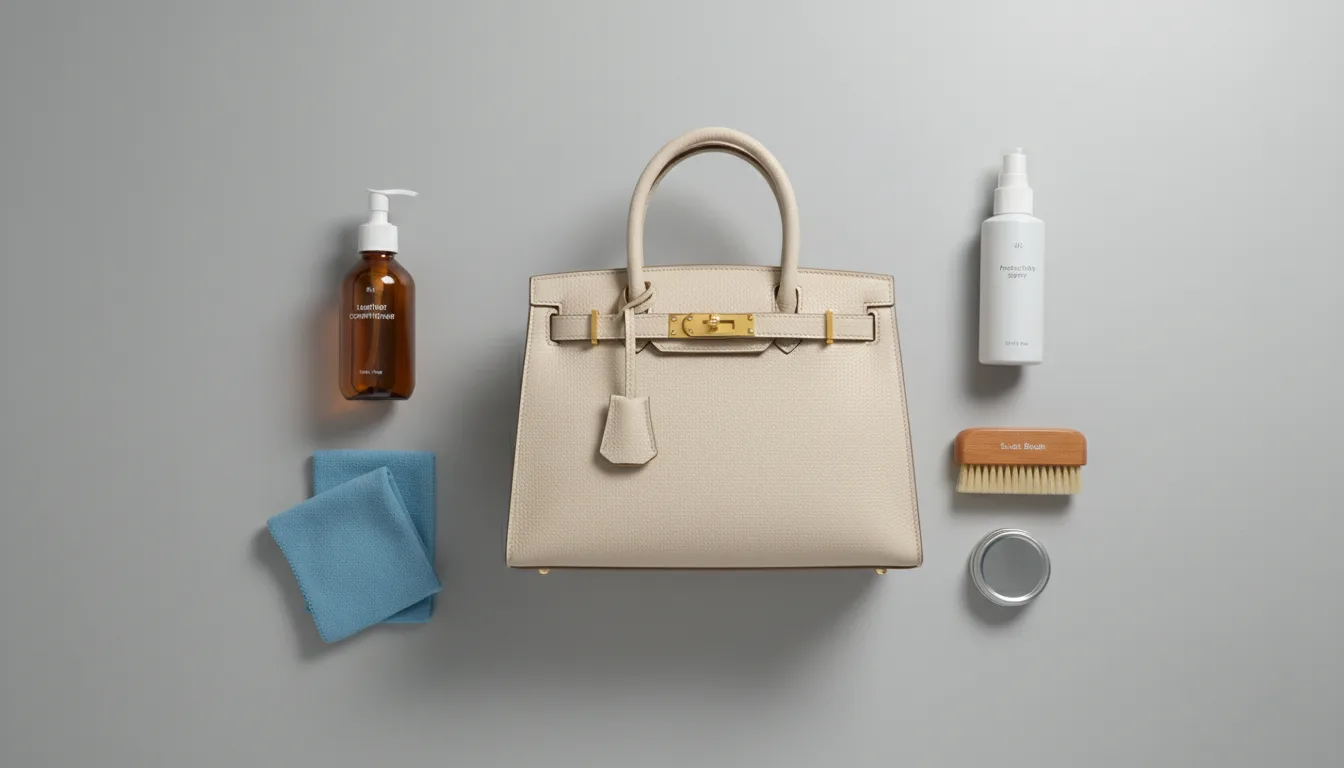
Building a care kit: For a basic luxury handbag care kit, you need: two microfiber cloths (one for cleaning, one for buffing), a quality leather conditioner, a leather protector spray, a suede brush (if you own suede), acid-free tissue paper for storage, and a lint roller for textile bags. Total investment: approximately $40-$60. This kit will service a collection of any size for a year or more.
Product-Specific Care Quick Reference
For quick reference, here is the care summary for every bag in our catalog, organized by maintenance intensity:
Low Maintenance (Minimal Care Required)
- Prada Esplanade — Saffiano leather resists scratches and water naturally. Wipe and condition occasionally.
- Prada Tessuto Nylon Tote — Nylon is water-resistant and easy to clean. Wipe with damp cloth.
- Dooney & Bourke Gretta — Coated canvas repels water and stains. Wipe clean.
- Gucci GG Canvas Belt Bag — Coated canvas with leather trim. Canvas wipes clean; condition the leather trim.
Moderate Maintenance (Regular Conditioning)
- Gucci Soho Flap — Pebbled leather. Condition every 3-4 months.
- Gucci Interlocking GG — Pebbled leather. Condition every 3-4 months.
- Michael Kors Kensington — Pebbled leather. Condition every 3-4 months. Watch for color transfer on the pink surface.
- Kate Spade Knott Hobo — Pebbled leather with cream panel. Condition regularly; protect cream panel from denim transfer.
- Ferragamo Studio Box — Pebbled calfskin. Condition every 3-4 months. Protect beige color from stains.
- Coach Tabby 26 — Smooth calfskin. Condition every 2-3 months. Shows wear faster than textured leather.
- Brahmin Duxbury — Croc-embossed leather. Condition every 3-4 months. Clean embossed crevices with soft brush.
- Prada Vitello Phenix — Pebbled leather. Condition every 3-4 months.
- Frye Melissa Shopper — Pull-up leather. Use wax-based conditioner every 4-6 months. Scratches self-heal.
High Maintenance (Specialized Care Required)
- Louis Vuitton Pochette — Vachetta leather trim requires careful handling. Protect from water. Patina develops over time.
- Marc Jacobs Belted Suede — Suede requires suede-specific tools and products. Never use leather conditioner.
- Versace Medusa Clutch — Satin fabric is delicate. Blot only; professional clean for deep stains.
- Tory Burch Ella Crochet — Hand-crocheted fabric. Spot clean only. Store flat and stuffed.
- FENDI Fendigraphy Leopard — Lamb fur. Professional cleaning only. Store in cool, ventilated space.
- FENDI Cashmere Shopper — Knitted cashmere. Lint roller after each use. Professional clean only. Store flat.
Frequently Asked Questions
How often should I condition my leather handbag?
Condition your leather handbag every 3 to 6 months under normal use, or monthly if you carry it daily in dry or heated environments. Over-conditioning can clog leather pores and make the surface feel greasy, so less is more. Apply a thin, even layer of conditioner, let it absorb for 15-20 minutes, then buff with a soft cloth. Saffiano leather like on the Prada Esplanade needs conditioning less frequently than softer leathers like the pull-up leather on the Frye Melissa.
Can I use baby wipes to clean my designer bag?
No. Baby wipes contain alcohol, fragrances, and chemical cleansers that can strip leather finishes, cause discoloration, and dry out the material over time. Instead, use a slightly damp microfiber cloth for surface dirt, or a dedicated leather cleaner for deeper cleaning. For coated canvas bags like the Louis Vuitton Pochette or Gucci GG Canvas Belt Bag, a lightly dampened soft cloth is sufficient for most cleaning tasks.
How should I store my luxury bag when not in use?
Store your bag stuffed with acid-free tissue paper (never newspaper — the ink transfers), inside its original dust bag, upright on a shelf in a cool, dry place. Never hang bags by their straps (stretching), store in plastic bags (traps moisture, promotes mold), or stack bags on top of each other (crushes structure). Leave closures unclasped to prevent hardware impressions on the leather.
How do I remove a stain from a leather handbag?
The approach depends on the stain type. For ink, dab (do not rub) with a cotton swab dampened with rubbing alcohol, then condition the area. For oil or grease, sprinkle cornstarch or talcum powder on the stain, let it sit overnight to absorb the oil, then brush away. For water stains, dampen the entire panel evenly and let it dry naturally — spot-drying creates water rings. For deep or set stains, consult a professional leather restorer rather than risking further damage.
Can I use leather conditioner on suede bags?
No. Standard leather conditioner will darken and stain suede permanently. Suede requires specialized suede-specific products: a suede brush for regular maintenance, a suede eraser for spot cleaning, and a suede protector spray for water resistance. The Marc Jacobs Belted Suede Shoulder Bag should only be treated with products specifically labeled for suede or nubuck.
How do I prevent color transfer on light-colored bags?
Color transfer — especially from dark denim onto light leather — is one of the most common issues with bags like the cream-paneled Kate Spade Knott Hobo or beige Ferragamo Studio Box. Prevention is easier than treatment: apply a leather protector spray before first use, avoid wearing the bag against raw or dark denim, and wipe down the bag after each use with a dry microfiber cloth. If transfer occurs, a specialized color transfer remover (available from luxury leather care brands) can often reverse it if caught early.
Should I waterproof my designer handbag?
It depends on the material. Saffiano leather and coated canvas are already water-resistant — they do not need additional waterproofing. Smooth calfskin, pebbled leather, and vachetta leather benefit from a light application of leather protector spray before first use and reapplication every few months. Suede should always be treated with a suede-specific waterproofing spray. Never waterproof cashmere, fur, or hand-crocheted materials — the chemicals can damage these delicate fabrics.